Published - Tue, 06 Jun 2023
How to successfully run an ecommerce business in 2021?
This pandemic and brick and mortar stores are ushering in the e-commerce industry, which briefly closed with a huge loss.
It used to be a luxury and a privilege to shop online, but now it has become necessary. Today, eCommerce’s business strategy needs to follow marketing emerging trends in eCommerce that will not come to an end like fads. Many successful businesses have shown us that e-commerce is the future. The only reason for their success is the recognition and experimentation of the e-commerce market’s tremendous potential.
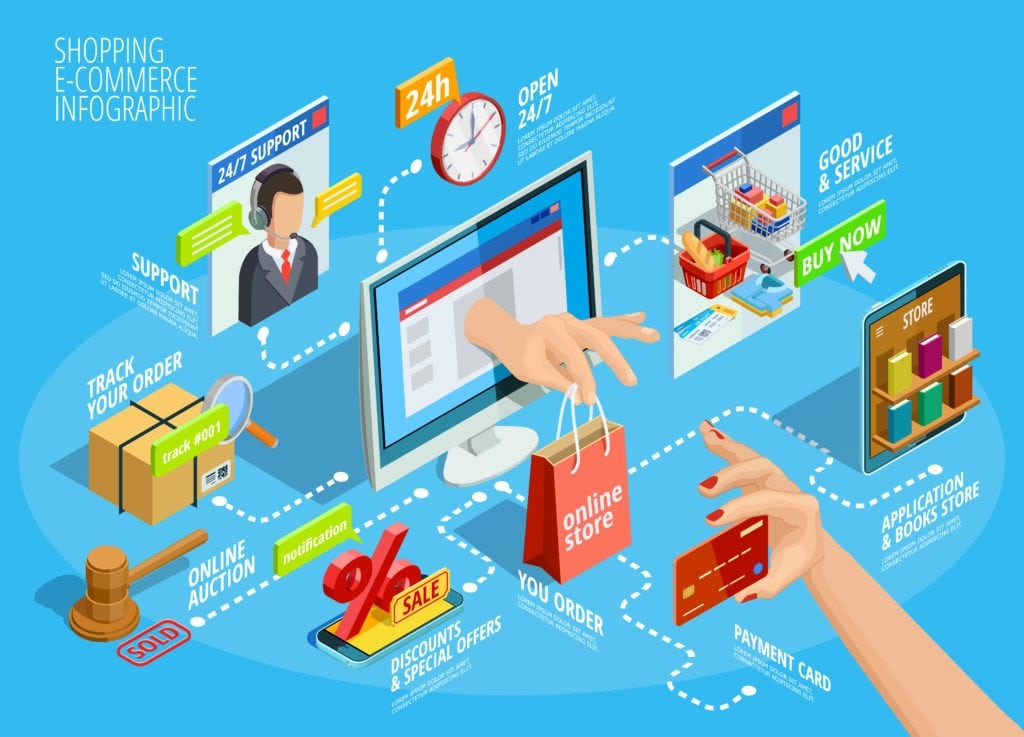
What will ecommerce look like in 2021?
Trends in Ecommerce in the current scenario shows no signs of slowing down. More than 2 billion individuals worldwide are expected to purchase products or services online in 2021, and retail e-commerce revenues worldwide will hit $4.9 trillion. These numbers inspire companies to look for developers of e-commerce websites that can spot trends and create a beautiful online store that can help drive sales.
- eCommerce Future is Customer-Driven
Like the focus on product quality and its price, the experience consumers have with your brand has increasingly become more about eCommerce. Today, eCommerce merchants with industry experts aim to create experiences that prioritize the usability, sustainability, trust, and productivity of consumers’ value.
Customers’ digital purchasing experience is becoming faster than previously expected. You need to align the company with relevancy and personalization to fulfill their needs. Not only these, but online retailers are also now expected to be at the forefront of digital innovation by digital buyers.
In 2021, what is the future of Ecommerce? Are you asking the same question yourself? We will cover the top trends in eCommerce in this post, which we recommend that merchants and business owners follow in 2021 to meet the ever-advancing demands of online buyers.
- Emerging e-commerce trends in 2021 to watch out for:
To guarantee ROI, various e-commerce platforms such as Shopify, Magento, WooCommerce, OpenCart, Lightspeed, Headless, and many others can help you create a scalable online store. Here are the top e-commerce trends to stay on top of for a successful 2021 to help you plan your business for the next phase in e-commerce.
- Improving the experience of users with AI, AR, and VR:
By 2022, online sellers will spend $7.3 billion on AI, and more than 120,000 stores will use AR technologies to give a richer experience to customers. AI provides clients with customized advice and feedback based on their actions. Also, the introduction of AR and VR technologies would allow your clients to see how they will look at a particular product, resulting in an improved shopping experience.
- Going All Social:
For almost all, more and more people are using social media channels. Social media networks are more than just advertising outlets with the enhancement of social media selling capabilities. You have to sell and make your ecommerce store thrive on Instagram, Twitter, Facebook, and YouTube, among the social media platforms.
- The Growth of Voice Commerce:
In recent years, voice assistants such as Alexa, Siri, and Google Assistant have welcomed old and young generations alike, for everything from waking them up to buying products online. Sales of Voice Commerce are projected to hit $40 billion by 2022. To optimize the online store for voice search in 2021, voice commerce’s increasing precision and convenience make it crucial
- Omnichannel Shopping:
Omnichannel retailing provides consumers through various platforms and devices with a seamless and reliable shopping experience. Businesses that embrace omnichannel strategies reach 91 percent higher consumer retention rates year-over-year than companies that do not. The number of omnichannel customers will also increase in 2021 with mobile devices and voice assistants’ growth.
Benefits of starting an ecommerce business in 2021
- Process of buying faster:
For what they want, clients will spend less time shopping. At one time, they can quickly browse through several items and buy what they want. Customers can find products available in physical stores far from them or not located in their area online.
- Cost reduction:
Cost reduction is one of the critical benefits of e-commerce for businesses that keep sellers interested in online sales. To retain their physical store, many sellers must pay lots. They will have to pay additional front costs such as rent, maintenance, store design, inventory, etc.
Through an e-commerce store, a seller may reduce the amount spent on store maintenance. An e-commerce store is affordable and, compared to a physical store, needs less investment. For individual and small-scale sellers who want to earn an income but do not have the start-up capital available, this is also a good opportunity.
- Affordable marketing and advertising:
To promote their items, sellers don’t have to spend a lot of money. There are many profitable Ecommerce business ideas, fast ways to market online in the world of e-commerce. Marketplaces in eCommerce are visual platforms, and sellers can show their product off. for example, Amazon sellers may use advertising tools to incorporate videos, infographics, and images with high-quality resolution.
- No, reach limitations:
It is only possible for a seller with a physical store to meet a certain number of buyers. They can deliver to the homes of customers, but distance limitations can be present. Several e-commerce markets have their systems for logistics and delivery.
Best profitable Ecommerce business to start with
2021 is just around the corner and starts an online business; there are practically no niche ecommerce ideas. But, especially if you are new to the world of digital commerce, which ones are worth pursuing and which ones are not can be challenging to decide. Some ideas for a niche ecommerce store can help you sell more in 2021 and make big profits.
- Products for beauty and health:
One of the fastest-growing industries online is the beauty and health industry. An eMarketer study notes that by the end of 2020, sales of personal health and beauty products will reach US$53 billion, which is 18.6 percent higher than 2018 sales.
- Sell art online:
Today, the online art market has an 8.4 percent share of the total market. From 7.2 percent in 2015, this number is up. So, if you have an eye for all creative stuff and know what makes people buy art online, 2021 might be the perfect year to start an online niche store selling art prints and authentic pieces.
- Sell smart home products:
One of the best niche ecommerce store concepts to try in 2021 is the sale of smart home products. Despite the tremendous potential and increasing demand for elegant home items, these devices are sold by few online business owners. For your e-commerce store, selecting this niche concept would create a profitable opportunity to sell these items online while making massive profits.
How to successfully run an ecommerce business in 2021?
How do you start an e-commerce venture, exactly? Here’s a step-by-step guide to starting your own ecommerce business.
- Decide your plan and model for business:
The first thing you have to do is to settle on a profitable e-commerce business strategy and e-commerce business model before you can choose what to sell online. You can either choose a single vendor or a multi-vendor e-commerce store. To this end, you can select either a single product line or have several product lines for your e-commerce venture, depending on the budget you have set for yourself.
- Select a suitable niche for eCommerce:
The most crucial step in opening an online business is determining the niche. Identify all the influential companies operating in this sector and ensure that competition is essential for the domain. Often avoid picking a niche that is too competitive and miss something dominated by big brands.
In the niches, you can also work together with company owners to cross-promote, become an affiliate, and develop your robust customer base. You won’t have to worry about delivering as much product if you can catch a handful of affiliate marketing opportunities, but you can still make a profit.
- Register Your Business & Brand name for Ecommerce:
The next step is to develop the perfect name for your brand once you’ve finalized the right niche for your e-commerce company. Make sure that the name of the brand should be short and quick to remember. Besides this, for your company logo, you can also come up with a finalized template.
- Conclude your Business Strategy for Ecommerce:
As you now have an understanding of what your business would look like. Your target demographic, product niche and brand name must have been made aware of you. Now is the best time to sit down and put on paper your business plan and settle on your start-up budget and monthly expenses. The financial aspect of a company is the most important one. Your break-even point, both in unit sales and in the word, you have to find out.
- Develop Your Website for Ecommerce:
You may either select a pre-built platform or build it from scratch when designing your website. Both have their benefits, but the preferred option is typically to create a website from scratch.
Some of the preferred choices for those looking to create websites for their e-commerce company are WooCommerce, Magento, Shopify. Now, you need to note that it is your website that visually portrays your whole brand. Therefore, no detail is too little; from the color to the font and photographs, everything should represent a slightly different story to the brand.
- Drive Traffic to Your Website:
You can hardly expect customers to hurry into your online store quickly. On the opposite, using all types of platforms such as email, social media, website, guest blogging, and so on, you need to popularise your products.
The goal is to increase brand awareness, generate leads, and drive conversions in the long run. On every page of your site, in your URLs, and your ad campaigns, you need to keep keywords and search terms in mind. If you don’t have the money to invest in promotional campaigns, you can still turn to the oldest way of ensuring your business is communicated, i.e., word of mouth.
Conclusion
It is an excellent idea to start an ecommerce business, especially in this COVID crisis, given that the demand for it is thriving. When it comes to trying to register and legalize your online brand, you might face barriers. And once you conquer it and have the business approved, you’ll meet a fair share of competition from people like you who want to become the next big thing in the world of e-commerce. Your vision is everything you need, a robust strategy for fulfilling this vision, and the courage and self-discipline to see it through until the end.
Created by

Comments (0)
Search
Popular categories
Ecommerce Trends
239Business
54Marketing
37Website
23Social Media
22Courses
21Latest blogs
The Power of Email Marketing in eCommerce
Fri, 15 Mar 2024

Tips for Optimizing Product Pages for Conversions
Thu, 14 Mar 2024
Mastering SEO for eCommerce Websites
Wed, 13 Mar 2024
Write a public review