Published - Sat, 03 Jun 2023
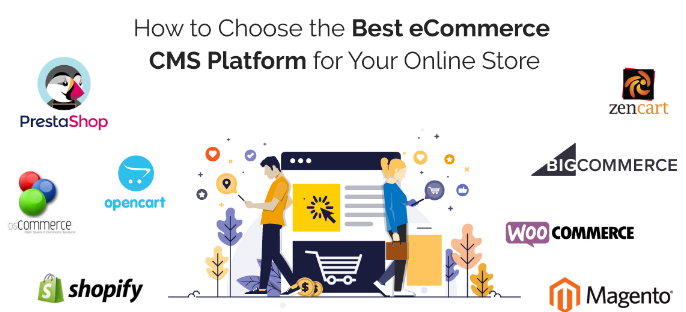
WHICH MARKETPLACE & CMS TO CHOOSE WHILE STARTING AN E-COMMERCE BUSINESS?
Are you a manufacturer/retailer? and wish to start your business on international ecommerce market places?
But have doubt that which market place is better for you to enhance your business online. There are many popular market places globally, But the problem, however, is that it can be difficult to identify which ones are a good fit for your business.
You need not to worry more as ecommerce guru brings a solution for you to go with best online marketplace whether you’re looking to sell domestically or internationally, ecommerce guru has put together a complete list of online marketplaces that we believe have the potential to help you expand your reach, test new markets & ultimately develop your business across the world.
We also provide you some of the key aspect, that you should be aware of, including the countries each marketplace is present in, their commission structure, fee per item, weekly & monthly charges and other relevant seller fees.
Small List of Online Marketplaces | |||
Market Place | Active User | Commision | Fee Structures |
 | 304 Million | 7-15% | Monthly subscription fee: |
 | 130 Million + | 8-20% | Commission: 8-20% |
 | 105 Million | 3.5 – 5.5% | Product category fee: 8% – 15% |
 | 35.8 Million | 5% | Listing Fees: $0.20 per listing |
 | 30 Million + | The registration is free, and listing fee ranges from 10¢ to $3.15. The final value fees for overstock stand at 3% for items sold under $25 | |
 | 30 Million | 9-15% | Newegg offers tiered membership options: Free, $29.95 a month, and $99.95 a month. The more you pay, the more support, tools, flexibility and listings you get. |
 | 4 Million + | 5-15% | Monthly Fee: None |
 | 175 Million | 7-11% | Monthly Fee: None |
 | 110 Million | 8-15% | Monthly Fee: None |
 | 300 Million | 15% | Monthly Fee: None |
 | 601 Million | 0-2% | Annual Fee: From $1,399 |
 | Million | 5-8% | Monthly Fee: None |
 | 19 Million | 6-17% | Monthly Fee: From 69 TL |
JD Worldwide | 18 Million | 2-10% | Annual Fee: From $1,000 |
 | 23 Million | None | Monthly Fee: None |
 | 3 Million | 7-12% | Monthly Fee: None |
 | 20 Million | 7-15% | Monthly Fee: None |
Below is the briefing about the online ecommerce market places which will help you to understand and compare the panels.
Amazon is the world’s largest ecommerce company. It operates marketplaces in 14 different countries including: U.S, U.K, Netherlands, Australia, Brazil, China, France, Germany, India, Italy, Japan, Canada, Mexico, Spain, and UAE, Amazon also runs separate marketplaces for businesses, called Amazon Business. Amazon also offer a highly successful fulfilment service called Fulfilment by Amazon (FBA), which enables merchants/sellers to reach the marketplace’s most active & loyal customers base. When you join with the Amazon then you get the multi opportunities to sell your products on Amazon marketplace with the help of the tools provided by the Amazon you can increase the chance to develop your business with authenticity.
Amazon Marketing and Sales Increase Options:
- Amazon Prime
- Fulfilment by Amazon (FBA)
- Sponsored Products Ads.
- Brand Products Ads.
- Promotions
- Lightning Deals
- Discounts
- Early Reviews
- Sales Price
- Buy One Get One Offers
- Gat Away Offers
- Free Shipping Offers
- Coupons and more

Sears got an extensive product offering, selling wide range of categories from fitness equipment, clothing and jewelry, right through to tools and kitchen appliances. Now with regards to the cost of selling on Sears, they charge a monthly fee of $39.99. Like other marketplaces, Sears do also operate their own fulfilment service, Fulfilled by Sears. With this option, sellers benefit from 24/7 customer support, as well as flexible payment terms thanks to their pay-as-you-go pricing model.
If you’re an international merchant wish to sell on the Sears marketplace, there are certain requirements you will need to meet.
These include having:
- A US-based warehouse (this can include a third-party fulfilment service, whether that be Fulfilled by Sears or an alternative),
- A US-based business address (this can be through a partner),
- A US bank account (again, this can be through a partner such as Payoneer or World First) and a valid US tax ID.
Formerly known as Buy.com, Rakuten.com is an undervalued online marketplace owned by a large global conglomerate based in Japan. This Portal offers a diverse range of product categories: Electronics, Electronics > Computers, Electronics > Software, Electronics > Video Games, Clothing, Shoes & Accessories, Clothing, Shoes & Accessories > Fashion Accessories, Clothing, Shoes & Accessories > Jewellery & Watches, Clothing, Shoes & Accessories > Shoes, Home & Outdoor, Home & Outdoor > Appliances, Home & Outdoor > Hobbies, Home & Outdoor > Hobbies > Musical Instruments, Beauty & Personal Care, Health, Sports & Fitness, Bags & Luggage, Toys, Toddlers & Baby, Pet Supplies, Media, Media > Movies & TV, Media > Music, Food & Beverage, Office Supplies, Automotive & Parts.
Etsy is a fast developing marketplace that began in 2005 for novelty handcraft & homemade products and Unique items. It has lower selling fees, and merchants can customize their own shops. Price is not as important as other marketplaces, because the buying community tends to value quality, artistry, and creativity over additional factors. On the other side, Etsy started allowing factory-made items, so you may competing with bigger brands as well.
Etsy has leading category from: Jewellery & Accessories, Clothing & Shoes, Home & Living, Wedding & Party, Toys & Entertainment, Art & Collectibles, Craft Supplies & Tools, Vintage and more.
- Manage your business from anywhere
- Promotional tools that drive traffic
- Analytics to improve your sales
- Accept payments seamlessly
Overstock has more personalized feel. The site charges 3% for items priced below $25 & has auction-style listings options as well as traditional listings. it has a smaller customer base than Amazon and its customer service could use some work. Overstock allows their customers to pay with bitcoin, which brings a whole new audience, and often offers coupons to customers.
Some quick facts about Overstock:
- In first three months Overstock had 1.8 Million $ in sales.
- Presently it has over 30 million visitors per month
- Revenue in 2014 was 1.5 Billion $
- It also has worldstock (market for handicrafts), Shop Main Street (For small US based entrepreneur), Adopt a pet (Connecting pet shelters across the country), Shop farmer Market (For freshly out of farm items).
- Overstock also accepts payment in form of bitcoins.
- Has its products in more than 46 Million homes.”
Newegg is an ecommerce marketplace that claims to be the “No. 1 marketplace for everything tech”. It has the categories from electronics, computers & parts, entertainment, smart home & games products. You can you’re your products on the portal, which reaches up to 36 million customers. Newegg is based in California & has distribution facilities across North America & Canada. It has global approach into more than 50 different countries. Newegg started as a marketplace for computer parts and electronics, but now expanded its product assortment to include automotive products, office solutions, clothing, & home goods.
Jet is now associated with Walmart’s U.S. e-commerce division, offering a unique range of products category. Due to its smart technology, Jet tends to have cheaper prices and a higher cart checkout price than other marketplaces. But, Jet doesn’t have as big a customer base as other marketplaces, but it makes up for this with more personalized seller pages & deals that draw in more customers.
NOTE: – Jet is owned by Walmart, but it operates as an independent site. It offers sellers a rules engine to optimize their profitability. The site receives millions of daily visitors.
eBay has been active since 1995, starting as a site to sell collectible PEZ dispensers. It grew to be very popular in the early 2000s, and is still a widely recognized marketplace today. Also, with Amazon raising its Prime fees yet again, eBay is becoming more competitive and consumers have less reason to stick to a single channel. Lately, however, eBay has grown more and more frustrating for sellers. Policies change often, seller fees rise constantly, and the person-to-person feel eBay used to have has been lost. Small businesses are choosing to change to new online marketplaces, and the future of eBay might not be secure.
Walmart is a well-established marketplace, and it has recently revamped its site to look more modern and appealing to millennials. Walmart is implementing more personalized elements, as well as special shopping experiences.
- API Integration
- Feed Template
- Bulk Price Update
- Bulk Lag Time Update
- Bulk Return Rules Update
Wish is a another B2C marketplace with approx. 100 million annual visitors. You can experience that its most of the items are low priced so you may have tough competition with the seller who deals in same categories. Additionally, Wish is reportedly the most downloaded shopping app globally.
Alibaba is the biggest Chinese based B2B marketplace ever. Alibaba has their customers in 200 countries buying over 100 million products across 40 different categories.
AliExpress is an Alibaba-owned marketplace that targets buyers outside of the China. It has a global site and supports 15 different languages which include: Russian, Portuguese, Spanish, French, German, Italian, Dutch, Turkish, Japanese, Korean, Thai, Vietnamese, Arabic, Hebrew, and Polish.
It’s a Turkish ecommerce marketplace which owned by eBay with approx. 60 million monthly visitors & 19 million registered users. Gittigidiyor sells over 15 million products across the 50 categories. And a large percentage of PO’s come from its mobile users.
Lazada, a marketplace owned by Alibaba Group, operates in Singapore, Indonesia, Malaysia, Philippines, Vietnam and Thailand. It has thousands of merchants/sellers, generating approx. $1.5 billion in sales annually.
Qoo10 is online marketplace with a participation across Southeast Asia, with sites specifically in Japan, Singapore, Indonesia, Malaysia, Hong Kong and China. Additionally, there is a global US version of the site. there are no additional listing fees and only a variable service (commission fee) ranging from 7-12%. Unlike many other marketplace’s commission models, the percentage in which a seller is charged is dependent on their seller grade, and the price of the item. The site itself lists products across a range of categories, from beauty, fashion and diet, right through to homeware and food & baby goods. Sellers also have the option to promote their products across the marketplace, for example by offering coupons, discounted prices and on-site promotions.
With over 3 million products across 60 different categories, Linio is one of the biggest online marketplaces in Latin America. Despite being a Mexican marketplace, Linio has a presence in Argentina, Chile, Columbia, Ecuador, Panama, Peru and Venezuela, reaching a total of 300 million consumers. One of the advantages to selling on Linio is the fact they offer seven different types of payment options available, making it a popular choice amongst Latin American consumers who tend to have very different payment preferences from one country to the next. They also offer telephone support, free returns and fast delivery times, as well as incredibly competitive commission rates. You can learn more about selling on Linio here.
PLEASE NOTE: – Our motive to provide you the basic information regarding online ecommerce marketplace and all provided information are subjective & could be changed by the time, and depends on the individual marketplace portal/software/Application company’s terms and polices.
Not all marketplaces are the same, and certain ones will make more sense for your specific market or industry. Once you have reviewed all these sites, do look at your competition and see if you can carve out a niche for your business. Do your research and see if you can compete on price, and it makes sense to try it out.
Created by

Comments (0)
Search
Popular categories
Ecommerce Trends
239Business
54Marketing
37Website
23Social Media
22Courses
21Latest blogs
The Power of Email Marketing in eCommerce
Fri, 15 Mar 2024
Tips for Optimizing Product Pages for Conversions
Thu, 14 Mar 2024
Mastering SEO for eCommerce Websites
Wed, 13 Mar 2024
Write a public review