
Created by - Yashraj Gautam
Democratizing Ecommerce with Big Brands | Ecommerce Guru
As technology advances, so is the way to retail in the economic world. Gone are the days when brick and mortar stores were a thing and retailing was not so feasible. Indeed, it required huge costs and hassle with all these supply chains and renting expensive stores. What was then a trading world has now shifted to the ecommerce world, which basically means, a digital world making things accessible to you within a few clicks. When we hear the word “ecommerce”, the names that often strike us are “Amazon” or “eBay.” Because these ecommerce marketplaces embraced the revolutionary phenomenon with the introduction of the internet way beyond anyone did. Ideally, this made them the big giants as they were the first ones to know the know-how and eventually became the pioneers. Democratization of Ecommerce – Making the Internet Marketplace for everyoneArguably, an ecommerce marketplace platform like Amazon could have created the monopoly by establishing a system that has to be followed without any question. And talking about the competition, there was no alternative for the new entrants instead of watching from the bay. But not anymore! With the surge in innovation and specifically keeping in terms of making ecommerce accessible to all, that is, the democratization of ecommerce, many entrants have now successfully sailed into the sea from being ashore. Business models are now adapting to the technology-first 3PL options and primarily catering to the SMEs, which has directly embedded the scaling down of the barriers.Amazon As The Foremost Internet Marketplaces Since 2013, Amazon has been the prominent ecommerce marketplace platform revolutionizing its way into the sphere. The post-pandemic world has given more space to it. The platform has captured most of the available growth opportunities as there is an absence of serious competition. Its capital investments, unique ecommerce strategy for services like 2-day delivery, and selling every product category are something that no other ecommerce platform can match. Until recently, no other brand tried to dive in with this revolutionary approach for whatsoever reason, which of course, has now made it somewhat challenging to cope with. Perhaps, the path taken by Amazon has resulted in not so favorable outcomes for the sellers and retailers. One can witness false advertising and often scams over the platform, which is apparent from the fierce price competition. This also delves into the problems with quality control. To drive the prices to a lower extent, Amazon leverages the immense demand against the retailers, which, most of the time, incurs a not-so-profitable step. Moreover, sellers cannot do anything about this except following these terms.Amazon, being an aggregator, is not much focused on the incentives that a seller might receive by selling its products unless the purchase is through Amazon itself. Nevertheless, with the emergence of new entrants like Shopify or BigCommerce, Amazon has been forged to induce some changes for the better of the merchants as well as the buyers. The surge of tech-enabled, human-centric fulfillment amid the ecommerce revolutionTraditionally, eminent sellers were more entangled with spending hundreds of thousands for setting up a website, settling for a site design and integration, which obviously wasn’t preferred by most merchants. With the influx of democratization into the ecommerce world, the small merchants can now pay a small fraction of expending for their ecommerce business and hosting a professional website. Nevertheless, the emergence of ecommerce and its democratization has resulted in us witnessing direct-to-consumer (D2C) business models for retailers. The ecommerce businesses now have access to directly connecting with their audiences. Platforms like Shopify, Magento, WordPress, and others developed as a more simplistic form of infrastructure for retailers’ utmost convenience. They now have the liberty to trade online by paying a minimal amount of $21 or whatsoever or even accessing the free trial to check the compatibility of these ecommerce marketplaces. Shopify Shopify has been successful at cutting out the competition by luring more retailers to start their journey with them. The Shopify website development ecommerce platform adds its value by extracting the friction out of an ecommerce business and ensuring a smooth experience for the customers. It provides a basic business model – Ecommerce solutions and Shopify payments in the form of Subscriptions and services. By perfecting its core functions, the Shopify ecommerce platform has explored new avenues for growth:Shopify Fulfillment Network (SFN) – a distribution and logistics service for order fulfillmentStripe Balance used in Shopify Balance – to embed a full suite of services related to banking Collaboration with Tik Tok – to add your brand’s TikTok on the dashboardGoogleGoogle has also sprinted in the zest of e-democracy to make “free” Google shopping results viewed on its primary search results. Earlier, only paid advertising was shown on the mainline search outcomes, which typically meant only the brand willing to pay more could showcase their products. This was not doing justice to the brands that were relevant to consumers’ search queries and were out shadowed by paid advertising. The democratizing strategy has impacted the brands and retailers in different ways:Brands will have the opportunity to get access to more visibility and free traffic from Google.There will be massive competition among the sellers for the visibility of listings.This will allow more focus on high-quality product feed which means only the quality of the product will define the brand’s success.To Conclude:To learn what is democracy, focusing on the key aspects which are leading a retailer to confine within an ecommerce business model becomes significant. To be more precise, there should be more liberation offered to a brand or retailer to do more than just survive in this ecommerce world. There should be more casualty to choose among the best compatible ecommerce marketplace to run your ecommerce business. And relying on just one internet platform is not a solution to it.
More detailsPublished - Fri, 09 Jun 2023
Created by - Yashraj Gautam
Mistakes That Can Stunt The Growth Of Your Ecommerce Business In 2022
Ecommerce businesses need to adapt strategies to stay on top of their game and beat the competition.Even though starting an ecommerce business is easy, running it and growing it to the pinnacle of success can be a huge challenge. If you are planning to open your online store, here are some common mistakes you should avoid to improve your chances of success.Read this blog till the end to learn about the common problems and get to know some professional tips that you can adopt for your ecommerce business in 2022.How Well Is The Ecommerce Industry Doing In India?The Indian ecommerce industry holds an Internet user base of more than 700 million as recorded in 2020, which is about 42-45% of the national population. Many businesses in India prefer offering COD (Cash On Delivery) with b2b commerce. Demand for international consumer products is expeditiously growing in the country from authorised ecommerce platforms or websites across the nation.“In India, international businesses with a long-run approach for their model can easily outperform local vendors.”Why?The long-tail business strategy allows companies to realise significant profits by selling small quantities of hard-to-find items to many customers rather than selling a small number of popular items. The Indian ecommerce industry is becoming more profitable and expected to grow at the same or more speed in the future. That’s why we believe that businesses with vision should be focused equally on eCommerce problems and solutions.Why Would You Prefer An Ecommerce Business Over The Offline Business?The ecommerce business is the future of the entire business world. With an ecommerce store, you gain absolute control, flexibility, and better accessibility while an offline store, you may restrict you. If you are also planning to start your online business, then you could scroll down for some major advantages you can get from your ecommerce journey. Take A Look At How Beneficial An Electronic Business Could Be For YouEasy To Show ProductsThe most convenient part about starting an ecommerce business is that a seller can easily list its products or services at the preferred online selling platforms whenever they find it right to do so. Under the pre-described restrictions of a platform, any company or individual can leverage the benefits of electronic selling.Secure OperationsMany traditional offline businesses find themselves less confident about selling online safety standards. To be safe, they should do proper research about the platform they plan to work with, as this will not only give you more information about the website but will also help in building strong trust in the platform.Quick Business GrowthEcommerce businesses help big companies and small companies gain a significant amount of their business growth with a wider audience, and all of this is possible without exceeding their ongoing budget. High Revenue With Low Set Up CostSetting up an electronic business does not require a lot of money but rather requires great effort. It even helps you manage your customer data more effectively. Moreover, the wide variety of coupons, discounts, and varieties in the e-commerce business can attract a large segment of buyers to your online store, which ultimately results in higher revenue.Let’s See What Are The Common Mistakes Many Online Businesses Make:Avoiding Market ResearchA successful business can never avoid doing market research before investing in certain products or services. It could lead to massive failure without any backup if it does so. And unfortunately, this problem is very common among many vendors.Not Sure About The Target AudienceIdentifying the target audience becomes very important as firing a gun without a target is pointless. If you want to keep your business continuously on the right path, you should not avoid defining your target audience.Choosing Wrong Ecommerce PlatformWe are covered with endless online selling options, and there are still more to come in the future, you might find yourself confused as to which option to go with or whatnot. “An ecommerce platform that doesn’t meet your business requirements can never help you thrive.”No Accuracy With PricingWithout a precise pricing strategy, it’s hard to get a loyal audience, or even if you’ve achieved so, it will still be very hard to hold them for long due to your high or no pricing strategies. Not Considering The Risk FactorRisk is something that never goes away, and the risk of fraud in online businesses is much higher than in offline ones. So it is always better to keep all the negatives in order to ensure the continuity of your e-business.Well, we know that most of you can relate to at least one of the above mistakes. But, don’t worry; we don’t leave our readers midway to walk alone. Instead, you can go through the following expert solutions to help yourself get out of the present dilemma.Always Be ApproachableAdd TransparencyClear Terms & Conditions PoliciesSeamless TransactionsTest Your Performanceand, Don’t Give Up On ChallengesTry Open Free Online StoreWrap UpIf you want to rise above and compete with your competitors, then make sure you never get your eCommerce business in the scenarios mentioned above. However, we hope that we have covered a great part of errors committed by many vendors, plus we have tried to provide you with the professional word on problems for the people who have a need of eCommerce solutions.
More detailsPublished - Fri, 09 Jun 2023

Created by - Yashraj Gautam
Lead School: An Integrated Learning Platform Bagged $100 Million Making Its
As we all know that the Covid times are by far the most disrupted years in the history of humankind, it affected almost every section of our society across the world.But the sector that was most afflicted was the “educational sector.”Initially, many were unaware of the future impacts of the COVID-19 pandemic or the challenges that the education industry might face. Many EdTech companies came forward with their creative initiatives which helped in providing better management, new teaching methods and a futuristic outlook to the educational institutions.Source: Lead School YouTubeLead School, an Indian Educational Startup, with its successful journey to become a “Unicorn,” has proved to be an unmatched choice for many Ed-nstitutions in these tough times.PlatformLEAD SCHOOLFounder NameSmita Deorah, and Sumeet Yaspal MehtaFounded2012SectorEducationCurrent Valuation$1.1 billionTotal Funding$100 millionWebsitehttps://leadschool.in/About the Founders:Founders of Lead SchoolSummer Mehta A management executive turned educator, having experience of about 20 years in leading positions in the Educational field.Smita DeorahCo-founder and enthusiastic partner at LEAD School since inception, she has been vocal about developing integrated learning solutions like LEAD, always in the early days.Lead School’s Journey To Excellence“LEAD SCHOOL,” a Mumbai-based school Ed-tech company founded by Sumeet Mehta and Smita Deorah, was established in the year 2013, providing modern day digital learning to all educational stakeholders. The ultimate idea of Lead School came into existence when one of the two founders, Sumeet Mehta, left for Singapore after successful completion of his MBA from IIM-Ahmedabad to work for P&G which seemed a great accomplishment for him like any other person. But still, after gaining in-depth knowledge, he and Smita had something to do for the educational system in his nation. On their return, they were disgruntled with the traditional learning of the Indian private schooling system that led them to offer a platform through which they would get all the assistance at one stop with minimal operational cost.Zealous Efforts Paying-OffIt currently has partnerships with over 3,000 schools, supporting nearly 1.2 million diligent teaching staff across 20 states in India, and has generated over $100 million in a successful span of 9 years.What Makes Them The Best Choice?At a Lead powered school, students receive the best education among the regional educational set up with the international standard learning via in-depth researched curriculum. Not only the students but the entire management can effectively manage their regular functions in a more constructive manner. It provides private schools with great initiatives like:Smart ClassesLearning with equal educational standards as the USA, Canada, and Singapore with a platform that enables kids to learn and grow in an exciting yet safe environment.Super TeachersWhile learners can learn uninterruptedly with this platform, teachers can equally experience a well-connected e-learning ecosystem. It offers a comprehensive, end-to-end solution that helps them deliver effective online teaching to their students. World Standard CurriculumFor school students, it offers interactive, easy-to-use tools like websites, mobile apps, manage exams, timetable scheduler, etc. Learning At HomeThey are ambitious to build a digital learning platform for students that have fewer resources but desire to learn immensely. Immense ExposureLead School has made the lives of its users convenient as well as productive, a platform where they do not feel shy of facing any stage or opportunity. Providing students the maximum exposure is the mission they’re currently working on.Future Plans of The Newest UnicornAs we know that more than half of India’s population is youth, which means a strong education system is the need of the hour. But due to current adversaries like the COVID pandemic, it is necessary to switch to modern learning solutions. And this is what inspires Lead School the most.Having achieved a great milestone like becoming an “Unicorn,” which is a big deal in itself and especially in the field of education. The Ed-tech firm intends to utilize the additional funds to improve its current curriculum and overall management system as per future requirements.
More detailsPublished - Fri, 09 Jun 2023

Created by - Yashraj Gautam
Top Brands Jumping in the Metaverse World
Nowadays, many brands and businesses are delving into believing metaverse as their future. It’s evident with big companies like Facebook metaverse, Hyundai, Nike, Coca-Cola, etc.,jumping into this ongoing buzz and proving to others how favorable the Metaverse world can be for modern-day business. Several companies are welcoming the efforts to shift brands into the metaverse. This is primarily because a lot goes into developing a brand, and this can only be accomplished if integrated with other technologies in the market. Also Read: How Does Meme Marketing & NFT Become a Game-Changer for Everyone?In this article, we will try to cover up the entire concept of metaverse meaning with examples of a few top brands that have successfully benefited their business and throw light on how to invest in the metaverse.Let’s Begin!Metaverse Meaning – A Deep InsightMetaverse is a collection of 3D virtual worlds designed to foster social interaction. Metaverse meaning is sometimes defined as a hypothetical iteration of the internet as a single, universal virtual environment aided by the usage of virtual and augmented reality headsets in futurism and science fiction.It gives a comprehensive insight into the world of augmented reality (AR), virtual reality (VR), and mixed reality (MR). Its solutions can be used in multiple sectors like Healthcare, Education, Marketing, or Advertising. Metaverse is basically redefining how we can interact with space, information, and each other by transcending physical boundaries.What Makes Metaverse A Favorable Choice?After a brief explanation about what is metaverse world, let’s walk onto few advantages of metaverse a business can take advantage of:CreativityCompanies with an optimistic vision and long-term future goals might be interested in the metaverse. Since, the world provides a vast scope of creativity; acknowledging your brand as big and established is not enough to be on par with the metaverse. You need to know what metaverse is, be creative and engaging when putting on your content.Less ExpensiveTo compare the efficiency of a method or technique, all you need to do is see if it gives a higher return on your investment. Metaverse comes with exceptional features which require fewer resources but gives maximum output.Capable Of Working RemotelyThe Metaverse doesn’t ask to be in a specific location to add to your business, but you can even work remotely. This means that there is no investment required for infrastructure and ou will be saving on your expenses.Adaptable To Any IndustryYou don’t need to be industry-specific to add Metaverse to your business. Be it healthcare, IT, marketing, or education; any sector can benefit from the use of this technology.How Can You Clip Your Business With The Metaverse?Following are the points that will guide you and tell you how to invest in metaverse:Confirm Your Business Need Simply flowing with the trends cannot help your business, but your strategies will. As we know that Metaverse is the future of online businesses, this does not mean a proper understanding of your own business can be neglected. So, before stepping into this exciting world, make sure if your business requires it.Check If It Is Helpful For Your BusinessAfter knowing the definite requirement of this technology for your business, try researching to overview the positives and negatives that you might face in the future. Pick Your TeamIf you have finally made up your mind to step ahead, the next crucial step would be the selection of the right workforce. Professionals with valuable experience can help you with your long-term strategies. Create Your StrategyAt this stage, prepare yourself with a solid visionary business overview, make sure you don’t take a single step forward without aligning with a proper strategy as it can harm you later.Identify The Best ToolsIdentification of the best tool available to know how to invest in the metaverse is one of the most crucial parts of this entire process. Tools for virtual design, ratcheting up inclusion and down control, and the most critical expansion of pricing parameters.Test Your PerformanceRelying only on the above steps may not ensure continuous development, but testing does. In the end, you should always like to analyze your performance with defined metrics for the continuity of your business.Do Big Brands Find Metaverse Reliable Or Not?If you are looking to gain perspective on the future of the Metaverse world, then you should surely go through the below listing of the popular brands that are already using it as a part of their business.Facebook MetaverseCoca-ColaBalenciagaMicrosoftWendy’sCharlie Cohen & SelfridgeNikeLet’s Wrap UpThe debate about the importance and the metaverse meaning world for online business will continue. But there is no doubt that brands with lower budgets and resources will find it very convenient for promotion purposes. The competition can be harder initially, but with more experience and insight about how to invest in metaverse time, more and more people will be able to use it and will find it helpful in the long run.
More detailsPublished - Fri, 09 Jun 2023
Created by - Yashraj Gautam
4 Ecommerce Websites That Are Dominating The Indian Market
As we all know, the Indian ecommerce industry has grown at a rapid pace that industry experts never imagined. Approx 30% growth in the ecommerce marketplace has been recorded in recent years, which is expected to expand in the coming years. The statistics point out how big and promising the ecommerce business in India is.We have compiled a list of leading ecommerce website development platforms that are performing brilliantly and have captured many eyes of Indian buyers online. Also, if you are planning to switch from your offline business and want to start with your online journey, you should read this article until the end. We have mentioned a couple of ecommerce website template builders that have effectively provided maximum satisfaction across the Indian market.Before we go straight to the list, let us first have a clear understanding of ecommerce, categories, and types of ecommerce platforms, as it may be difficult for people who even lack the basic understanding.Different Ecommerce Models Ecommerce marketplace generally refers to the sale or purchase of products or services over the Internet through electronic devices such as mobiles, computers, laptops, or any other electronic medium. To know further in detail about Ecommerce, you should be familiar with all its different categories:B2B: Business-To-BusinessB2B ecommerce platforms involve the process of selling and buying between two different businesses online. The ultimate objective is easily understood, which is to expand customer reach and operating costs to increase revenue generation. B2B sellers typically work with wholesalers, large retailers, non-profit organisations, or resellers.B2C: Business-To-ConsumerWhen a business sells its products or services directly to the consumers with no pre-defined barriers, it refers to the B2C or Business To Consumers ecommerce. We have exemplary B2C ecommerce business models in India: Amazon, Walmart, eBay, and Shopify.C2B: Consumer-To-BusinessC2B ecommerce platforms majorly emphasise generating revenue with the help of their customer base. It could be via ideas by crowdsourcing, receiving feedback, or more. The critical factors in the C2B ecommerce business model are audience engagement and market research. Shutterstock and Google Adsense are the best examples of the C2B ecommerce model.C2C: Customer-To-Customer/ Consumer-To-ConsumerC2C can be customer to customer or consumer to consumer. It is an ecommerce business model that focuses on the product or services transactions between the customers. Moreover, it connects people and encourages them to do business regardless of the category, goods or services.Types of Ecommerce platformsHostedA hosted ecommerce marketplace platform is a “software as a service” (SaaS) that hosts an online store. A well-hosted ecommerce platform will have ecommerce-specific features such as online payment integration and inventory management, robust and reliable server technology resources, and expertise in compliance and security. These platforms deal explicitly with web-based transactions and data management.Self-HostedSelf-hosted platforms usually work with the help of web hosting. Self-hosted platforms are decentralised, which means you are not dependent on any centralised service and are free to choose your hosting service. It grows with added mobility as per the requirements of the customer.Now, let’s move on to some of the leading ecommerce platforms that have been successful and have proved their dominance in the Indian ecommerce industry.List of Top Online Selling PlatformsAmazonMarketplace NameAmazon IndiaFounderJeff BezosEstablished ( In India)2013HeadquartersHyderabad, TelanganaRevenue$116 BillionWebsitehttps://www.amazon.in/FlipkartMarketplace NameFlipkart IndiaFounderSachin BansalEstablished ( In India)2007HeadquartersBangalore, KarnatakaRevenue$78.4 BillionWebsitehttps://www.flipkart.com/MyntraMarketplace NameMyntra IndiaFounderMukesh Bansal, Ashutosh Lawania, Vinit SaxenaEstablished ( In India)2007HeadquartersBangaloreRevenue$30 BillionWebsitehttps://www.myntra.com/ SnapdealMarketplace NameSnapdeal IndiaFounderKunal Bahl, Rohit BansalEstablished (In India)2010HeadquartersNew Delhi, IndiaRevenue$5 BillionWebsitehttps://www.snapdeal.com/ Knowing the list of a few big companies is not enough. Many readers may want to start with their platform after realising the supremacy of the above-listed ecommerce platforms.That’s why we have compiled a list of a few ecommerce website development platforms that are an easy-go-to for kicking off your journey. Best Ecommerce Websites Builders In India:WordPressUcraftWixShopifyLet’s Wrap UpAlthough these platforms operate with a vast range of products and services, they highlight some big brands that specifically dominate other ecommerce marketplaces and stand out in the overall online competition. Amazon and Flipkart are considered the most in-demand ecommerce platforms in India, with a collective user base of more than 40-45% of the market share of 900 million approx. in total.
More detailsPublished - Fri, 09 Jun 2023
Created by - Yashraj Gautam
What is the Future of Retail Industry in 2022?
The retail industry is in the midst of a significant change when the exponential growth of e-commerce, new technology, and ubiquitous shopping opportunities is on the rise. Yes, the retail industry is changing rapidly with unprecedented advances, and when something grows big, it requires a considerable amount of focus; similar to the retail industry in India.“But as we all know that the COVID pandemic has undoubtedly affected almost every industry, the retail industry is the worst hit. Being restricted from physically opening all stores, the volume of investment in the retail businesses has also reduced.”Is the retail industry falling towards the dark future, or will it overcome and grow even further than before?Well, it is a vast and unpredictable thing to do. But we have made our efforts to give you a precise overview of the retail industry’s future. In this article, a few points will be kept in consideration for you, even if you are a seller or a shopper. Evolution Of Retail Industry The growth of the retail sector has been the changing way of shopping over the years. The retail industry is undergoing massive changes across the globe, with new consumers’ shopping habits and technology developments having a significant impact on physical stores. But this is just a current facade of the recent retail industry, which is certainly not enough to understand the future challenges or opportunities of the retail industry in India.Let’s dive deep into the topic.How Was The Retail Sector Previously Used To Be?Buying and selling is not a new thing; this process has been going on since the existence of humankind. To trace the entire history of retail trade, or as it was earlier called the sell-buy process, we should know when buyer and seller had to use barter systems (exchange of goods to buy desired goods). It sometimes led to the indivisibility of certain goods, difficulty in storing value, or lack of a standard measure of value.Present & Future With Some Interesting FiguresThe retail industry shares a global market value of approximately $23,000 billion in 2022, rising with an annual compound rate of 2.4% since 2015. Moreover, it is expected to grow at a sustainable growth rate of 7.7% and might reach $30,000 billion in 2021-2026. With the current growth of the ecommerce industry, the pioneers are expecting the retail industry in India and global collectively to pass the target of $40,000 billion in 2030 with a collective growth rate of 6.4%. But Will These Figures Remain The Same?We should not overshadow the volatility of the market according to future scenarios, and especially we must be a little cautious after living in this ongoing pandemic. Everyone talks about the impact of the pandemic on the retail industry. How exactly is it affecting? This is not the first time the world has been going through adversity like the covid pandemic. We have faced many pandemics or epidemics in the past like “The Black Death” or “The Bubonic Plague,” Cholera, Spanish Flu, Smallpox, Polio, and so on. But the scale of the blow for the retail sector we are experiencing this time is entirely incomparable. Is Pandemic Responsible For Shifting The Retail Industry’s Future With A Modern-Day Approach? No, not completely, because more than 45% of the world’s population has already switched to advanced means and methods. 15-20% of people were interested in opting for the internet for their daily routine needs; only a small section of the population felt hesitant in using the e-options.The way the pandemic has engulfed the e-commerce industry is unprecedented. The enormous impact of the pandemic has imbibed more people to try and use modern-day methods.You must have gained a brief understanding of the past and present conditions of the retail industry meaning. Let’s view what professional industry experts have predicted for the retail industries’ future, along with some quick tips for sellers and buyers:A Great Level Of Online PenetrationDue to a lack of audience involvement in the offline retail industry, sellers will opt to shift their operations to online mode. This is because offline methods are expensive, whenever they want to advertise on television, radio, print media, or billboards, all these will cost them dearly. So it might not be a good deal to pursue this in the future.Sellers with physical stores will find it more convenient and beneficial to operate with their new e-stores rather than the traditional ones.Importance Of PartnershipsThe retail industry meaning is vast as it also includes retail partnership is basically a collaboration between two parties, each depending on the resource and user base of the others to generate or increase its revenue. It is imperative to innovate regularly and bang on the following available opportunities.Going into the partnership is like a win-win situation for the retail business. It requires limited resources from a single person, but make sure you choose a reliable partner.More Emphasis on Customer ExperienceAs we move towards the ultra-modern era of Internet business, it is clear that customers’ expectations from their brands are also increasing. Negative or positive reviews undoubtedly affect a business in the long run.Getting the best customer experience is one of the hardest things, but your delivery capabilities can improve with continued efforts and focus.Social Media Will Play A Huge RoleReaching and attracting different audiences for your brand can be done effectively only with the help of social media platforms, as more platforms are emerging as a part of marketing for many businesses. Thus, it is believed that social media platforms for retail businesses will multiply.Choosing the right social networking site can always be difficult, so never be lazy while selecting a reliable social media medium.Let’s Wrap UpArguably, the growth of the retail sector across the globe is mainly influenced by the effects of various key factors such as diversification, globalization, innovation, and expansion. All these factors still have the same importance. Still, the way pandemics or other unfortunate events prevail has completely changed experts’ perception of the retail industry’s future.We believe that we have provided you with extensive knowledge and current Indian retail industry analysis 2022 with future predictions and professional tips.
More detailsPublished - Fri, 09 Jun 2023
Created by - Yashraj Gautam
Digital Currency Exchange Plans To Launch India’s Biggest NFT Marketplace, Suggest
With rising trends of metaverse and the increasing popularity of NFTs across the globe, there has been significant progress in the field in India. The digital currency exchange is taking proactive steps in what is going to be a revolutionary approach toward different NFTs marketplaces in India. The digital currency exchange has planned to launch the first-of-its-kind and the biggest NFT marketplace along with its Peer-to-Peer (P2P) engine. The digital currency exchange aims to take the metaverse arena to its next level, and launching the biggest Non-Fungible Token marketplace in the country will fuel the process. There have been some speculations about the applications and uses of mainstream blockchain adoption. The advent and rising popularity of NFTs have created a stir across the globe. Leveraging The Popularity of NFTsAmidst times when NFTs have gained immense popularity, CryptoBiz takes the initiative to create an NFT marketplaces list that will engage both creators and collectors. They can create, sell or collect digital tokens based on blockchain technology. This marketplace will enable you, creators, to mint their artworks into valuable digital assets while also providing them with the platform to showcase them online.The Key AspectsThe new marketplace concept planned by the digital currency exchange will enable collectors to seamlessly browse the types of NFT marketplaces and also make the purchase of the items they like from their favorite artists through the process of bidding. The marketplace will also provide a great opportunity for the artists to make money from their creative artworks. Not just that, these new and huge NFT marketplaces will bridge the gap between creators, collectors, artists, and their fans. The platform will come with several streamlined and highly advanced features that will make for smooth, safe, and convenient NFT transactions. From single-click intelligent contract deployment to mining, as well as the establishment of an active NFT community, the marketplace will be equipped with some advanced and attractive features. All of these features will ensure that the traders get a more enjoyable and convenient NFT marketplaces trading experience. CryptoBiz’s Peer To Peer Engine For The New MarketplaceAlong with launching the biggest NFT marketplaces list in India, CryptoBiz created a P2P engine dedicated to simplifying the conversion of fiat currency to digital currency. This P2P engine is designed to make this conversion safer, smoother, and faster than ever before. This P2P engine from CryptoBiz's will enable its users to instantly buy and sell digital assets with the help of their existing bank accounts. CryptoBiz has also said that the P2P engine will be 100% safe and secured. It will also be completely decentralized so that there are no transactional interferences from authorities. The P2P engine aims to automate the process of digital assets transfer between two parties. It is designed to remove any dependency on any third parties for the transfer, thus eliminating any form of intervention.This will make for a more personalized, secured, and convenient NFT and digital assets trading experience for its users. Final Thoughts Talking about the top NFT marketplaces and P2P exchange, CryptoBiz Founder and CEO Rahul Rathod said, “Today, we cannot ignore the fact that the NFT trend in India is picking up faster than anyone has ever anticipated. As a result, more and more artists are looking to join the NFT trend to monetize their content. Our NFT marketplace will serve the purpose of the biggest digital pool for minting, listing, buying, and selling digital assets.”With the new NFT marketplace, the digital exchange currency will create new horizons for NFT trading in India.
More detailsPublished - Fri, 09 Jun 2023
Created by - Yashraj Gautam
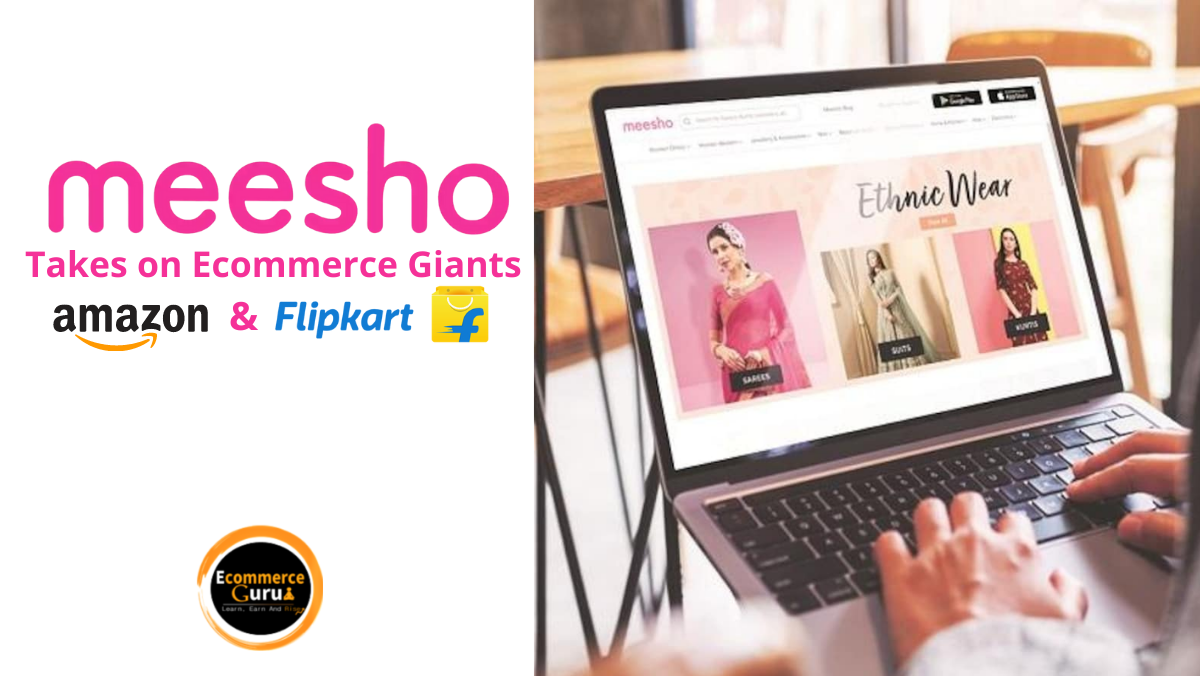
Meesho Takes on E-Commerce Giants Amazon and Flipkart: Major Changes
Meesho, one of India’s fastest-growing social eCommerce platforms, had already declared that the enterprise aims to carry out major business expansions. The platform aims to target 100 million small businesses focusing on women-led resellers in the field of fashion and homeware. This strategy pits the platform against e-commerce giants like Amazon and Flipkart in India.The Bengaluru-based company has already successfully conducted a $300 million fundraising last week from Japan’s SoftBank Vision Fund. Meesho is now valued at $2.1 billion. The platform now aims to take on Amazon and Flipkart by outlining a new business model and significant changes in their seller policy. These changes are primarily aimed to lure more vendors to the platform. The 7-Day Payments Feature Introduced by Meesho.Amongst the fundamental changes in its business model, the most mentionable one is the change in its seller policy which introduces a 7-Day Payments Feature. Meesho has announced that the platform will reduce the payment cycle for sellers from 15 days to 7 days. The platform will also not charge sellers for order cancellations from here on, whether itself or automatic cancellations. What does this mean? Payout is the payment made by an eCommerce platform to the seller after a sale is completed on the platform. The industry standard for payout duration is set at 15 days, and most eCommerce platforms pay their sellers on 15-day cycles. Meesho makes an exception and stands out in the crowd with their new 7-day payout feature. The “7-Day Payments Feature” will attract more vendors to the platform as the sellers will be paid faster than most other similar platforms in the Indian market. The company, in its statement, has said that its key focus is on “capital efficiency,” and this new payment schedule and structure will help vendors reinvest the money in their businesses, leading to consistent and continued growth and success. Zero Penalty stands to be a key USPMeesho has also said that it won’t charge sellers if an order is canceled, both for automatic and self-cancellations. Automated cancellation is when the seller runs out of stock, and self-cancellations are those made by the customer. So far, sellers were charged 2.5% of the product’s price per day of delay till the order was canceled. New Business Model Outlined by Meesho: A Step Into The Future Of Ecommerce Meesho is one of the newly established unicorns in the country, established by Vidit Aatrey and Sanjeev Barnwal. The company is outlining a new business model after a new round of funding, and this is two years after Facebook-funded $25 million to the company.Vidit Aatrey said, “India’s e-commerce is about 15 years old, but the number of small businesses that are selling their products online is less than 1 million. Most of the small businesses are still selling offline, which means there is structurally something wrong.”The firm has gained considerable popularity as a reselling platform that aims to primarily empower women entrepreneurs and encourage them to start their businesses online through unbranded and longtail channels. Meesho focuses on products across a vast range of catering, including fashion, furnishing, and home appliances, and follows a parallel trade system through platforms like Facebook, Instagram, and WhatsApp. The platform aims at further expanding into other categories like grocery and fast-moving consumer goods (FMCG). Ending NoteWith these two highly seller-centric policies of 7-Days Payment and Zero Penalty on cancellations, Meesho aims to further climb the trajectory of seller acquisition and give tough competition to major players in the e-commerce field, including Amazon and Flipkart.
More detailsPublished - Fri, 09 Jun 2023
Created by - Yashraj Gautam
5 Major Factors That Drive Customers To Your Store
One of the most common questions many online sellers working on different marketplaces usually ask about a similar topic is “How can they attract the attention of customers towards their respective estore.”And we think that’s a very valid question because if you understand your customers’ needs well enough, you can achieve everything.Is it next to impossible to understand your audience’s mind?Well, definitely not; as we all know, many successful ecommerce businesses have been amazing at breaking the mood of their audience. So, it’s just up to you.Still not clear?Do not worry. In this article, we will explore the ideas that will give you a brief statement of how you can drive a certain number of potential customers to your ecommerce business store. Psychological reasons with real-world examples will be explored in detail to see how you can use these insights to increase sales and improve customer satisfaction.1. Ask Customers To Recommend Your Business To Their Dear OnesIf you can encourage your audience to recommend their families and friends about the connection on social networks, it will help you. As we know, customers are more inclined to seek retail suggestions from others for their ecommerce website development dilemma. A considerable portion of customers said their go-to source for retail ideas is individuals they recognize, and 35 percent go to social networking sites for suggestions.2. Quickly Respond To The Negative ReviewsCustomer reviews are the second most popular way to find new retail stores, and they’re growing in popularity. Pay close attention to all websites where clients can leave evaluations and identify your business section, notably Google. After setting up those pages for the ecommerce business store, make sure you’re keeping an eye on consumer reviews and have a plan in place for reacting. This demonstrates that you are active and paying attention to your clients’ favorable and unfavorable comments.3. Include Ad CampaignsEveryone likes a good deal, so it’s no wonder that discounts and promos are one of the most effective ways to attract new consumers. When you conduct a promotion on your ecommerce store setup, be strategic. Aside from the traditional holiday discounts, look at your analytics records to see when people will spend less on full-price items and consider conducting a promotion.If you have got a sale, make sure to publicize it on company social media. If you buy targeted ads, direct them to a local audience from your ecommerce store setup. In our poll, 92% of responses were that proximity is vital when determining whether or not to try a different product.4. Try Adding Maximum Payment OptionsSince more individuals are choosing cashless transactions, refusing to acknowledge multiple payment options may cause you to lose clients. According to many surveys, more than half percent of shoppers believe it is critical to make a purchase through multiple gateways given by an ecommerce business.5. Consider Unique Shipping SystemsWe have seen that people who are ready to check out of their purchasing process will only be surprised by exorbitant shipping fees or lengthy shipment times, and that can result in a deal-breaker for many customers.Examine various delivery options on your ecommerce store setup to discover one that meets your client’s expectations while maintaining your profit margins. If you buy your stock from a reseller or another producer, dropshipping may be an option to make stock control smoother.Let’s Wrap UpMany hidden and unknown factors determine what can help attract your audience to an ecommerce business store. That’s all you need to know to increase sales and improve your customer experience. Businesses should understand that they have to be competitive with their competitors on online stores, but it is up to you how you do.By the end of this article, we feel that we have given you a certain amount of informational knowledge that can help you get maximum potential customers.
More detailsPublished - Fri, 09 Jun 2023
Search
Popular categories
Ecommerce Trends
239Business
54Marketing
37Website
23Social Media
22Courses
21Latest blogs
The Power of Email Marketing in eCommerce
Fri, 15 Mar 2024

Tips for Optimizing Product Pages for Conversions
Thu, 14 Mar 2024
Mastering SEO for eCommerce Websites
Wed, 13 Mar 2024
Write a public review