Created by - Yashraj Gautam
Best Strategies To Increase Your Ecommerce Sales
Everyone wants to try their hands in the business industry, and when it comes to our minds, we can only think of an Ecommerce business. Here is a fact that says if you want to grow your ecommerce sales and attract more customers and traffic, you must market it. But grab these opportunities; you must tackle all the competitors in the market. Ecommerce marketing is a rising business, and it will continue to grow in 2022. So, if you are damn serious about growing your ecommerce business features, you should seek to put some strategies in place to help your business move forward.There are various ways by which you can see your ecommerce business continue to grow. So now, we will discuss some of the best strategies you can use to increase sales of your ecommerce business.Develop Your Brand AwarenessA brand name is the soul of any business. Increasing your brand awareness will help people discover your brand and memorise it again in the future. You can impact this by posting regularly on your social media channels and coupling your organic content with paid promotions. A strong SEO strategy can also help your consumers see your products on the first page of web results. You can also start brand awareness campaigns that will make your way to increasing sales. Make Your Email List And Stay In TouchEmail is one of the best performing channels, and more than half of consumers claim that marketing emails help them make purchasing decisions. A powerful email generation strategy starts with collecting consumers’ email addresses. You must always include an opt-in email capture form on your site, and you can increase signups by giving something in return that may consist of a discount code, free shipping, etc.If you are a newcomer, you should start with a couple of email generation strategy per week, but keep an eye on finding the right balance between high open rates and low unsubscribe rates. Your content should be personalized and exciting by including articles, videos, guides, and special offers.Mobile OptimisationResearch claims that 59% of mobile users can grow your ecommerce sales, however smaller retailers achieve a 30% higher mobile conversion rate than big brands, indicating a mobile optimization is an essential experience.You should make your website mobile responsive such that it can automatically adapt to different device sizes. Quality assurance (Q.A.) tests ensure that your website is easily clickable, content displays correctly, and scrolling is a breeze. You can streamline the browsing, search, and checkout processes by providing autofill suggestions to improve the customer experience.Note Customers Reviews And FeedbackPositive reviews from customers are worthy for a growing ecommerce business. According to recent research, reviews can boost conversions by 270%, as 97% of consumers say reviews influence their decision making to the next level. After the checkout process, you can ask for a business review by including a pop-up with a clickable star-rating option.Start Social Media CampaignsSocial media is a proactive approach that allows you to show your content in your prospective customers’ feeds through campaigns. Video ads outperform photo ads by 40% on Facebook and earn three times more engagement on platforms like Instagram.Instagram has heavily invested in its ecommerce business features, and it has been seen that shoppable posts generate more than 100 million taps every month. You should experiment with all the placements available such as your Instagram page and stories, Instagram Live, IGTV, and Reels.Wrap UpThe ecommerce strategies that we discussed above are tried and tested; some will help you achieve quick wins, and others might bring long-term success. Your audience must always be your priority, and you need to understand how they respond to different methods by regularly reviewing your customer and sales data. By this method, you will surely discover which tactics work best to grow your ecommerce sales.
More detailsPublished - Fri, 09 Jun 2023

Created by - Yashraj Gautam
Top Ecommerce B2B Marketplaces In India
The B2B ecommerce market is rapidly broadening in India as an aftermath effect of the pervasive Covid-19. In the past few years, the restricted movements and frequent lockdowns have forced several manufacturers and merchandisers to grasp technology for their business, which has turned out to be beneficial in terms of revenue. This blog will discuss the top online B2B ecommerce marketplaces in India.IndiaMARTWith respect to the concern of the Indian B2B marketplace, IndiaMART is the leader of the chart to date. The website gained a high reputation for keeping an accurate database in a span of time. Indians always prefer IndiaMART as their first choice to look for the sellers’ details online. They provide a list of contact details through which buyers can directly contact the seller and make the deal.AlibabaAs far as anyone can think about a B2B marketplace, Alibaba is the first name that always comes to their mind. This Chinese company governs the B2B ecommerce marketplace industry worldwide, allowing buyers and sellers to connect from anywhere. They do not put any bar on quantity, and buyers can choose to buy as little as one product. Indeed being a global giant, Alibaba has a list of competitors in India as well.TradeIndiaTradeIndia is a B2B ecommerce website that was launched to connect buyers and sellers around the world. This enabled the Indian B2B marketplace owners to connect with other businesses globally, and they also facilitated global buyers to locate top Indian B2B suppliers, manufacturers, and exporters.Emerging B2B Ecommerce In The Indian MarketplaceAs we have categorised Indiamart and TradeIndia as B2B ecommerce marketplace, it should be kept in mind that they don’t enable commerce on their website. In general, they are primarily business listing websites that only help you connect with businesses offline.India is still in its aborning stage concerning the B2B ecommerce platform. Several startups have enabled B2B commerce on their website, missing in business listing websites like Indiamart.So, let’s look at these emerging B2B ecommerce marketplace startups in India.UdaanUdaan is a B2B ecommerce platform specially designed for small & medium businesses in India. It helps retailers connect and communicate with wholesalers and traders. Currently, this startup serves more than 3 million retailers and small and medium-sized enterprises. It has signed up collaborations with thousands of brands such as Coca-Cola, PepsiCo, Boat Lifestyle, Micromax, HP, LG, ITC, HUL, etc.MoglixIt is an industrial B2B ecommerce website that serves more than 500,000 small and medium-sized businesses and enterprises. Moglix also has a supply chain network of almost 16,000 suppliers with over 35 warehouses and logistics infrastructure. They are close to welcoming 500,000+ SKUs on their platform, claiming that this startup is the largest ecommerce platform for industrial goods in India.Power2SMEThe name itself says that Power2SME was established to help SMEs grow better by making the availability of raw materials more accessible and more affordable to the businesses. They also provide loan facilities for SMEs. This platform is popular as it fulfils all SMEs’ requirements and high-quality suppliers, including LG, Essar, Indian Oil, etc.AmazonBusinessAmazon is the name of the trust. This B2B ecommerce marketplace guru took the entry into the B2B segment after receiving FDI approval in 2015. It was started in Bangalore and Mangalore in India. However, Amazon Business has plans to expand in the Indian B2B marketplace moderately. It is a members-only website, and the one who owns a license can join the business.Conclusion You can find several other ecommerce B2B companies in India that are doing well in their way. Also, do not forget that this industry is booming, so you will see more names enter the market. B2B marketplaces have been established in India as the most effective and result-oriented trading platforms for buyers, merchants, and wholesalers.B2B marketplaces provide them with so many features, deals, and services that can assist them in growing rapidly.
More detailsPublished - Fri, 09 Jun 2023
Created by - Yashraj Gautam
How To Check Fake Reviews Ecommerce On Your Website
Can humans spot fake reviews on ecommerce platforms? According to recent research, they can’t do this at all. The study claimed that humans suffer from a disease known as a truth bias.This indicates that humans assume everything they read on the internet is true until proven using considerable evidence.But do you think that artificial intelligence is accurate at fake review detection? Answers may vary.Let’s take the example of Cornell University which decided to use Artificial Intelligence (A.I.) to check out scam reviews on hotel sites which showed a result of whopping 90% accuracy. They noted down three key points from this experiment.Truthful reviews contained more concrete words explicitly relating to the hotel in the questionnaire, but fake reviews ecommerce are more indistinct and inappropriate for setting the scene.Deceivers used more verbs, and honest reviews contained more nouns.Fake reviews ecommerce included more first-person pronouns to balance their illegitimacy.Ecommerce customers may use these three crucial findings to make their judgments for fake reviews on ecommerce platforms.Do You Think That Fake Reviews Ecommerce Matter?By now, we know what makes a fake review, but you might be thinking that do these matter, or do they make much of an impact when attracting a customer to your ecommerce website? Well, the short answer is simply yes. It is seen that over 90% of shoppers’ buying decision is dependent on online reviews. Hence, fake reviews ecommerce can be harsh to a brand’s reputation as they wholly deteriorate any loyalty that the brand gained between them and its customers.Culture Of Distrust In EcommerceIf you are a brand owner or own an ecommerce website, you must be aware of how much weight reviews carry to build trust among your customers. Online shoppers can take the situation into their hands to decide for themselves whether to review a product or not. Thus, it is basically the ecommerce website’s authority to check that its customers do not need to do this. However, brands must not write false reviews on their products and services to attract more customers to their websites and gain more sales.Do You Think There Is Any Solution?Yes! There is a solution to this problem that the Department of Consumer Affairs recently provided on 28 May 2022, which states that the Centre will work on developing a framework to fake review detection on ecommerce sites.The Department of Consumer Affairs (DoCA) proposed this solution after researching the current mechanism followed by ecommerce entities in India and across other countries in the world.Ecommerce websites give you a virtual shopping experience without any need to physically examine the products. This lets the consumers heavily rely on fake reviews on ecommerce platforms to see what other customers experienced after purchasing from the company.The ministry claimed that all stakeholders agreed to this solution to detect the issues closely and provide the appropriate framework for fake review detection developed against the consumers’ interests. They also said that paid and unverifiable reviews with the absence of disclosure would be introduced to help consumers recognize genuine reviews.ConclusionSo what we learned from the above context is that all ecommerce websites and online marketplaces need to protect their customers at a higher level. Using Artificial Intelligence, the government will bring a framework to detect and eliminate fake reviews on ecommerce platforms to fight online fraud and deception.
More detailsPublished - Fri, 09 Jun 2023
Created by - Yashraj Gautam
Reasons To Build A Custom Ecommerce Website Using Python
If you are looking to start your ecommerce business, you can see there are many vital factors to consider before making the final decision. The factors might be what technologies you should opt to build your site with, how scalable they must be, and what features you need to include for ease of use by your customers and staff members. One of the best technology that has these features in itself is Python.This blog will highlight the top seven reasons for choosing Python as your language of choice when developing a custom ecommerce website that you can fully take control of.Custom Ecommerce Website Is Highly SecureConstituting a built-in mechanism, Python can manage access to modules, packages, classes, and functions. There is an availability of several possible access control schemes with the option to write your own. This allows you to protect your ecommerce website while looking at what you need to watch and giving more appropriate open access. The popular Python framework Django can help you create security boundaries in your custom ecommerce website, and it makes coding in this programming language safer than PHP. It can also remove the most common Python security blunders that ecommerce website developers are guaranteed to drive while taking care against cross-site scripting, request forgery, and SQL injection in apps and websites.Scalable Ecommerce WebsitePython can scale quite well with top websites like Pinterest and Instagram as it can do the heavy lifting for their website’s large user base. If you want to start your ecommerce business, Python can help you reach a larger audience without sacrificing the website’s speed or performance.Custom Ecommerce Website is User-FriendlyPython can be new to some programmers, but they can learn the basics from several free online resources. People interested in writing a custom ecommerce website may try using a framework like Django because it accommodates features that can make programming manageable and efficient. It can also help you to prevent code duplication.The most popular Python framework, i.e., Django, follows the “Don’t Repeat Yourself” (DRY) principle. This claims that you can use the same code outside of an app or model by copying the code. The primary goal of ecommerce website developers is to make it reach customers’ sight. This can be achieved by creating a user-friendly ecommerce website for customers to access information about your products easily.Easy To Maintain Ecommerce WebsiteThis programming language is easy to maintain as it can be modified and enhanced with relative ease. In addition, it has been around for over 25 years now, and Python is still a free-to-use language. It does not require much effort to learn and use means you can quickly get up and run with it. Django is an ideal choice to start your ecommerce business or a custom ecommerce website without involving much Java script or other coding frameworks.You can build an ecommerce project with the best possible performance using Python language.Custom Ecommerce Website Is FastPython language has a fast processing ability, making it a top choice of ecommerce website developers to work on a lot of data processing. Its framework Django is super-fast because it compiles into bytecode before running and provides a high-level API for accessing databases and web services.Python allows you to use the same features to improve the performance and responsiveness of your custom ecommerce website.ConclusionAs you can see, Python is a highly adaptive language and helps to start your ecommerce business with faster and easier production of codes. It is highly secure, scalable, and user-friendly, which will make you enjoy superb support, and easy maintenance. If you are thinking of setting up an ecommerce store that you have in your vision, then there is no best language than Python programming language.
More detailsPublished - Fri, 09 Jun 2023

Created by - Yashraj Gautam
Indispensable Features To Add In Your Ecommerce Website 2022
There are certain elements that are essential for every ecommerce website like yours to stay relevant and competitive in the market.So, have you ever thought of building up a new type of ecommerce store for your business or looking for the leads to make improvements and functionality in your current store?Starting up with an ecommerce store experience in thought to delight your customers can be as simple as taking a little inspiration from your favorite ecommerce brands.Let’s take a look at these must-have features for ecommerce sites.1. Footer NavigationYou can consider it the best way to utilize your ecommerce website footer to help customers find your top products. You can add a list of links to your top products and services that your customers want to see.For example, T-Mobile uses its footer to lead customers directly to their social media profiles which feature phones and plans, support, and company information. Their footer majorly includes links to everything they want their customers to discover.2. User-Friendly NavigationStarting up with an ecommerce store and a user-friendly navigation system helps your customers find the products they quickly need. Your products should be categorized logically based on the most popular categories as some people search for products by brand name, while some shop by category. Your navigation bar should reflect the organization’s name and links to inexpensive and sale products.3. Product VideosYou can add a video to your product pages to increase conversions. It has been claimed that more than 50% of shoppers prefer online video to decide on which brand or product to purchase.Many ecommerce platforms ensure retailers add videos and images on their product pages. The use of high-quality product images and video helps you sell products online and in-store.4. Product ReviewsProduct reviews and ratings are the user-generated content found on ecommerce websites. This section is most famous for an ecommerce product page to provide social proofs that their product is the best fit for their needs.For example, eBay allows their customers to rate and review products, and they also display reviews in the product descriptions and sponsored items.5. Product FAQ’sThis is an efficient way to combine user-generated content into your ecommerce store. You can add a section of the most frequently asked questions by customers.There are several ways to take advantage of this section:You can increase your number of sales by answering the customers’ most commonly asked questions about your products.You can also reduce your customer service time by answering product questions before and after the purchase.For example, ecommerce platforms like Amazon provides a question and answer section on their product pages to allow customers to ask and answer questions to ensure the most frequently asked ones appear at the top.6. Order TrackingAs a customer, whenever we place an order, the top question that comes to our mind is when our order will arrive. You can make it as simple as you can for customers by allowing them to check their current order status on your ecommerce website.For example, AutoZone has provided an order tracking page that doesn’t require a login every time. They only need your email address and the order number you received in their order confirmation email.7. Mobile-FriendlyThe mobile-friendly store helps shoppers purchase from any device from your ecommerce store. Remember always to consider having a mobile app for your store. Mobile apps grab your customer’s minds, and you can also place your brand logo on the smart devices customers prefers to use most.Let’s End UpAs highlighted above, make sure always to remember not to reinvent the wheel. It is such a simple task that includes listening to your customer’s feedback and keeping up with the competition in the market to see if new trends in ecommerce arise.Do not try every new feature on your ecommerce platform if you do not hold specific information about it. The motto of your ecommerce website should be your customers and taking care of the expectations that they want us to fulfill.
More detailsPublished - Fri, 09 Jun 2023
Created by - Yashraj Gautam
Reasons For Using Ecommerce Forecasting Demand For Ecommerce Business Growth
Understanding ecommerce is quite complicated. Your ecommerce business should be agile and easy to make decisions. So when you get right down to it, You should ensure the heart of your online retail remains simple. Selling is all about looking at what customer demands and how could you fulfill them. This straightforward premise is now known as the vast global ecommerce market.But how is it possible to know what your customers want? More importantly, what could they demand next week, month, or in a year? Don’t worry; this is where ecommerce demand forecasting comes to the rescue. Read on to learn about ecommerce demand forecasting and how it can help you grow your ecommerce business.What Do You Know About Ecommerce Forecast Demanding?Ecommerce demand forecasting refers to predicting the future demand for products in the market. That product could be new to the consumers or the same that you’ve been selling for years. You can forecast demand by using the best way, i.e., by using historical data. You can grow your ecommerce business by introducing ecommerce demand forecasting as the niche. You can identify patterns and trends by raiding your sources for sales data, and this will help you estimate future sales and how they may fluctuate. Accurate data analysis and strong decision-making need to maintain stock level up to the mark.Why Should We Use Ecommerce Forecast Demanding To Grow Ecommerce Business?There are many benefits of using forecast demand to generate significant growth for your ecommerce business. By using the knowledge of it, you can:1. Introduce New Products In The MarketYou can use demand forecasting along with your various product research methods to identify new products that will perform well in the online retail market. It also lets you know the best time to start selling them.2. Increase Customer Awareness Of Your BrandYou can also run targeted campaigns to grow customer awareness of your brand by investing in marketing and advertising. Thus, it will drive more conversions and reduces returns.3. Expand Your Business To Additional Sales ChannelsCracking ecommerce demand forecasting for one of your sales channels isn’t an easy task. But once you crack it, you can imitate the success on your other sales channels and ecommerce website.4. Balance Risks Of Your Rising BusinessMoreover, demand forecasting can help identify, balance, and overcome the risks to grow your ecommerce business. Using it gives you insight and knowledge of new products, new competitors, recessions, and seasonal impacts. It will ensure that you invest enough time and money into guaranteed sellers.What Are The Various Methods Of Demand Forecasting?If you are thinking of extracting sales data and making predictions, you should start your trial with these demand forecasting methods to find the best one for your ecommerce business. Let’s take a look at the list below:1. Time-series analysisTime-series analysis involves using your previous sales data to make results about seasonality and events during the year. By analyzing the point in time, you can increase stock and convert your marketing efforts accordingly.2. Trend projectionThe trend projection helps in assuming sales trends of the previous year will repeat themselves at the same levels of demand this year.3. Barometric forecastingBarometric forecasting uses past economic metrics to predict future trends in the online retail market.4. Casual forecastingCasual forecasting is a forecasting method that takes into account as much information as possible to show you accurate predictions. This includes data on sales, competitors, marketing activity, and the economic landscape.ConclusionGrabbing the grips with the basics is the first step toward ecommerce demand forecasting. After that, you can go even deeper into demand forecasting to learn more about the causes and effects of your ecommerce business. This will help you to analyze your customer spending behavior based on pricing, promotions, or free shipping. You can grow your ecommerce business by using data to plan successful and sustainable growth in the industry.
More detailsPublished - Fri, 09 Jun 2023
Created by - Yashraj Gautam
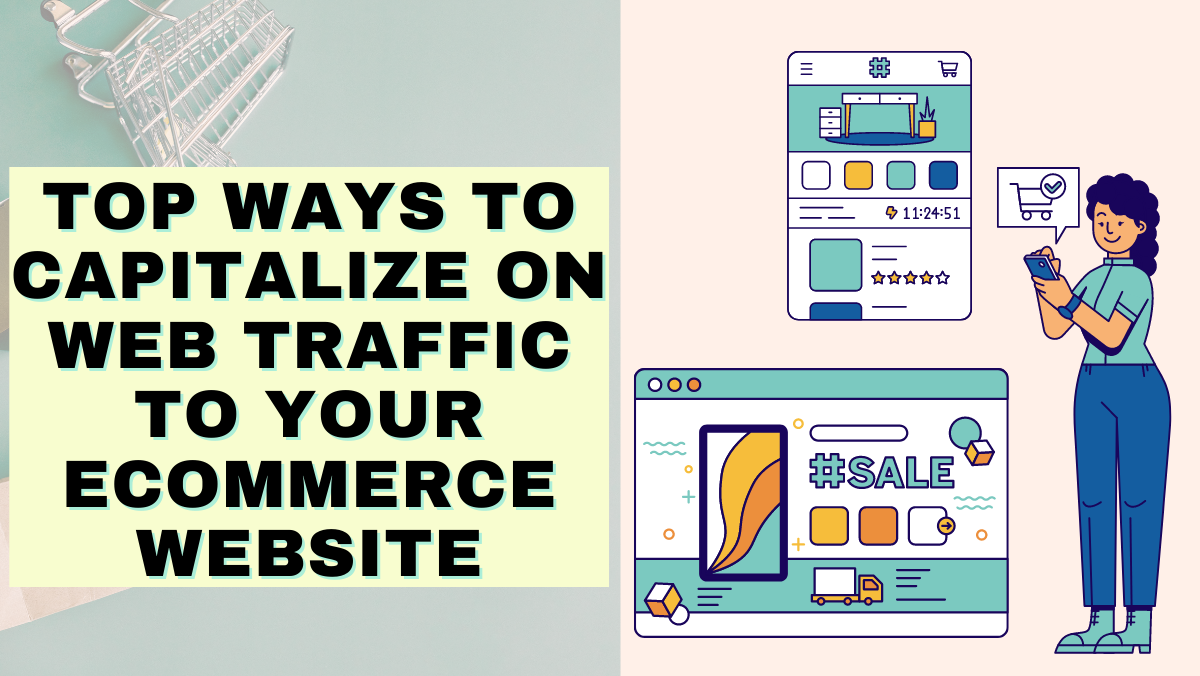
Top Ways to Capitalize on Web Traffic To Your Ecommerce Website
A website’s speed is a crucial part of any successful ecommerce business. If it takes more than 3 seconds to load, you will lose potential customers to competitors with faster ecommerce website,and in the end, your ecommerce search engine rankings will suffer. If your ecommerce website theme is quite brilliant, it will undoubtedly impact viewers to judge and make decisions quickly. But if its loading speed is slow, your impatient viewers would not like to access it again.In this blog, we will see some strategies to manage and improve good ecommerce website traffic for a successful ecommerce business with helpful tools, tips, and tech to make the process easier. Let’s learn strategies to capitalize on your website traffic to generate more leads and sales from your visitors.Improve Website Speed To Gain ConversionsThe top-most important factor that you should focus on for your ecommerce website is its speed. Your website (including your mobile site) should load instantly, according to the studies, the average Speed Index speed is approximately 4.7 seconds on desktop and 11.4 seconds on mobile devices.When your website does not match this average Speed Index speed, it automatically decreases its ranking in search engines. Moreover, you can use practical tools to help measure your ecommerce website speed. Consider tools like Google Lighthouse, WebPageTest, Google PageSpeed Insights, GTmetrics, Pingdom, SpeedCurve, etc., to conduct speed audits.Make First Impression Be Your BestThere is a saying, “First Impression Is The Last Impression.” So, always make sure that at least your ecommerce website should have an excellent design to make an immediate impact on your viewers. Adding eye-catching images and fun concepts to your web page will keep your customers on the page longer. It is claimed that with the first impression formed in 0.05 seconds, users tend to have enough time to scroll down.If your ecommerce website theme is terrible, you can’t achieve a successful ecommerce business because you can retain your viewers for a bit of time on your page. Hence, a first impression is vital.Attracting Better Organic Search ResultsIt is indispensable to generate ecommerce website traffic from organic SEO by understanding and implementing good structured data and meta tags for a successful ecommerce business. Having a unique website is not the only necessary if no one sees it. It would be best if you optimize or format your ecommerce website to bring the quantity and quality of traffic, thereby boosting sales and maximizing conversions. You can increase organic search ecommerce website traffic while designing your webpage by rephrasing it in more specific formats or long-tail keywords that you can see online to corner your targeted market. You can research the content people search for to provide value to those users.Always Create Valuable, Original, And Quality ContentYou must ensure the quality of the content posted on your ecommerce website to improve your search rankings. If your website has a better search ranking, it will capitalize on your website traffic and more chances to sell your products and services to potential customers. By doing research on long-tail keywords and Google trends, you can quickly understand your readers. You should learn how to portray the value of your offering and reinforce your brand with existing customers.SummaryAs we saw, you should build a website that has a loading speed less than 2 seconds. Always focus on improving your speed factor, as this is where you will gain ecommerce website traffic. By creating a great first impression on your visitors, you will learn how to boost better ecommerce search engine results. Your priority should be optimizing your on-site SEO through your effective use of tags.For this, long-tail keywords can be used to drive valuable research content for your site. You can also add voice search SEO to your site, like Alexa, Siri, and Google Home, to make these searches far more commonplace. Always create the type of content which is eye-catching to the users. Use multiple tools to monitor your progress as they allow you to generate thorough reports to get feedback on your strategies
More detailsPublished - Fri, 09 Jun 2023
Created by - Yashraj Gautam
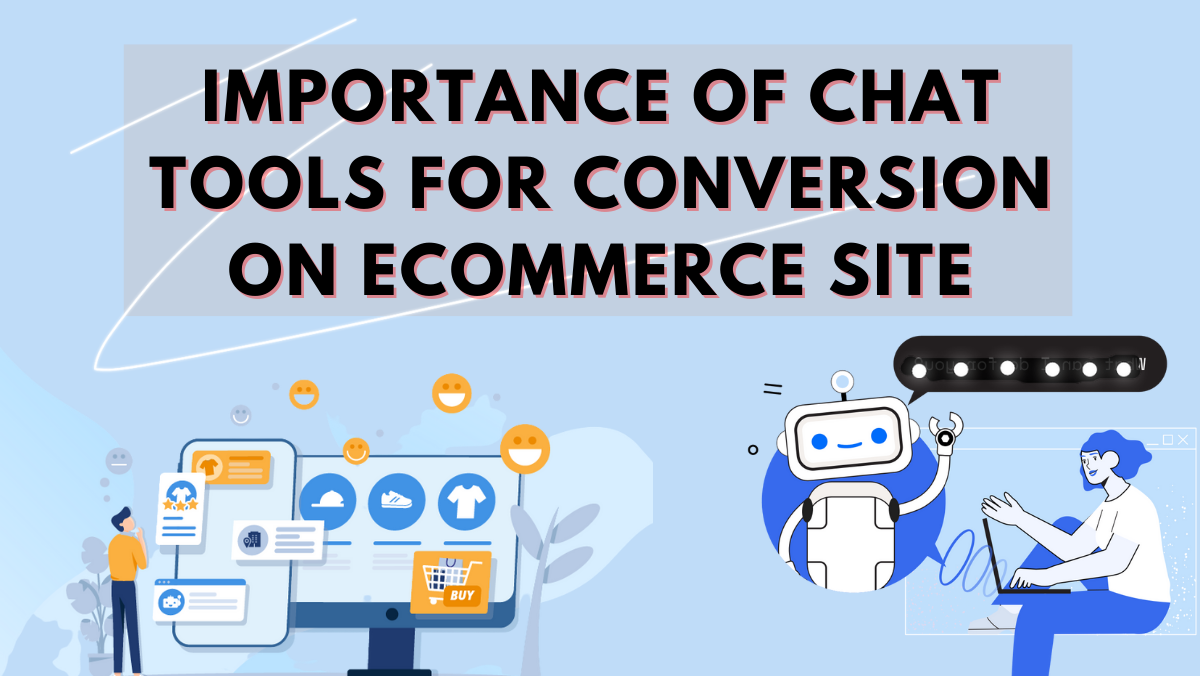
Importance Of Chat Tools For Conversion On Ecommerce Site
Live chat tools are used to address customer concerns in no time as they offer users fast, easy answers, reducing the burden on both company and customer.Therefore, it also decreases your customer service costs significantly and drives sales and generates conversions. These AI computer programmed chatbots help you with customer service by converting human utilization through voice commands, text chats, or both.If you have good customer service, it will encourage your ecommerce brand loyalty and help boost more conversions. This is the primary section of your ecommerce business. You can show you care about your ecommerce visitors by frequently answering their questions, issues, concerns, and challenges because even minor changes to your customer service can yield significant results.Solving customer issues quickly and providing live chats are critical. Let’s discuss some chat tools to speed up the conversion of your ecommerce site.Live ChatFor any query, Live Chat tools will help you in different ways.Live chat tools help you address customer queries quickly and provide services to the user in a fast, accessible answering mode on the ecommerce site. They are fast working and take only 10 minutes to lead you to a phone number.They offer you quick and effective services to make you meet the right people with the appropriate responsive software.They can load information faster than everyone, and therefore, they can speed up your response times and conversions.They support the users to locate answers quickly by providing a positive experience and ensuring that every issue is handled efficiently with quick and convenient support.According to saying of experts, using a live chat can help you generate 4-8x more leads for your ecommerce business. On the other hand, live chat content is also used to support other targets. Your customer service costs significantly decrease with increasing sales and generating conversions. These practical live chat tools increase your engagement and encourage the repetition of purchases. As per the reports, over 68% of website visitors engage in a live chat and approximately 63% return to a website offering live chat to complete a purchase. ChatbotsThe chatbots are AI computer programs that change the human conversation in voice commands, text chats, or both. They are integrated through major messaging applications. You can choose a program for your chatbot to conduct talks with your customers. Your content library will vary depending on the content related to products, services, or offerings.Some Popular ToolsSome most common Chat tools are Drift, ZenDesk, and Intercom. These programs are specifically designed to highlight chat features and other applications to manage all in one convenient location. DriftThis conversational marketing platform helps your team generate more qualified leads through chatbots and conversation. Drift is designed to help you with your product sales and advanced automation.IntercomIt consists of a customer communication platform that includes products like a live chat system for support, sales, and marketing teams. They have a fully dedicated chat for anything you need, such as customer service, answering questions, and sales.Zendesk ChatIt has a live chat and communication feature with easy customer assistance via chat, phone calls, email, social media, etc. Interactive Voice Response SystemsInteractive voice response systems are practical tools to make instant customer connections, reduce costs, and increase engagements. It is a convenient self-help AI-driven technology that customers can use for inquiries and get immediate, relevant responses.According to reports, more than 50% of customers think it is important to solve product issues independently rather than rely on customer service. IVR systems help them whenever they need assistance, facilitate sales, and collect customer feedback. SummaryIt will be best if you improve your customer service as a priority. Moreover, it is connected to every other aspect of your ecommerce business operations. You can choose great tools, and also, making minor updates to your ecommerce site will help you see significant impacts to boost more conversions. The Live chat tools, chatbots, and IVR systems are used to combine support for your ecommerce site and business operations.
More detailsPublished - Fri, 09 Jun 2023

Created by - Yashraj Gautam
5 Vectors For Your Ecommerce Fashion Growth
The fashion ecommerce is always changing industry and to keep this momentum continued, various fashion brands organizes fashion shows. There is nothing to shock about if we experience a quick surge in this booming industry. As per various ecommerce fashion experts investors can go with their investments in this big-business.The ecommerce fashion industry is growing rapidly. In this blog, we will discuss five vectors that aim to help you keep up with trends and grow your ecommerce fashion business uninterruptedly.But before this, take a look at some interesting figuresAs per the Statista report, the fashion industry is the most comprehensive B2C ecommerce market segment. The fashion ecommerce market is expected to grow at approximately 9.1% per annum. The global size in 2020 was estimated to be around US$ 752.5 billion, and thus, by the end of the year 2025, it is expected to gross US$ 1.164,7 billion.Now let’s take a look at all best practices one by one.1. Primarily Focus On Customer ExperienceIt would be best to get to know your customers well and help them find what they are looking for as quickly as possible. You should make sure that it is convenient to navigate your fashion ecommerce store. Each product should be available within a few clicks.It is essential to make your customer feel confident while purchasing from your fashion ecommerce store. Here are some key points that you can opt to increase the trust of your visitors:a. Provide Easy And Smooth Deliveries/ReturnsIt is crucial to have an accessible way to deliver/return customers’ packages. If it is not simple, it will not result in a purchase in the first place. As per the report of Postnord, home deliveries are pretty more popular than ever. More and more people are now choosing to have their packages delivered directly to their doorstep instead of picking them up from a parcel agent.b. Customer ServicePeople always look for good customer service in your fashion ecommerce business, as it is a need, even when your business is online. Always make sure that your customer service can handle all the queries about your products and services that your customers may have. Always be available by phone and email, and you may also provide a live chat function on your ecommerce site.c. Provide Various Payment MethodDo you know around 12% of online shoppers cancelled their last purchase as it was not possible to pay in the way they wanted to? That’s why offering more payment options will allow you to make your audience satisfied.2. Email MarketingFashion Email Marketing can put your customers at the center of choosing the successful brands from the rest. It would be best to build a long-term relationship with your customers by sending personalized emails to them.It will:Increase sales and inspire your customers.Use of customers’ recommendations.Personalizing newsletters.3. Get Customer ReviewsOnline shoppers constantly research the internet before purchasing from your fashion ecommerce store by gathering information about the product they want to buy. Analyzing users’ experiences by reading product reviews and ratings is significant for purchasing.Some key points for this:You should ask for feedback and take advantage of it.A fashion shopper always relies on reviews.Deal with negative reviews by applying a responsive strategy.4. Artificial Intelligence Can Improve Product RecommendationsYou can also promote complete looks and suggest other products that go with the purchase. For example, you can recommend a beautiful shirt to the jeans that your customer added to their shopping cart. Your personalized product recommendations are based on visitor choice and what they have bought.5. Ecommerce Website SearchSuppose your customer finds the right product in your fashion ecommerce store, and the chance of sales and conversion increases. It creates brand loyalty and security in the customers’ minds making them feel secure in coming back. But if their search is not included in your fashion ecommerce website, the visitor may think that it is not contained in your ecommerce site.SummaryThe fashion industry will meet and conquer new frontiers. Ecommerce fashion retailers should try on easily transitional changes. Merchant platforms like Shopify have made all these tasks easy to implement. They have accessible payment options and B2C ecommerce market popularity, which means your fashion ecommerce store can already win the race if optimized correctly.
More detailsPublished - Fri, 09 Jun 2023
Search
Popular categories
Ecommerce Trends
239Business
54Marketing
37Website
23Social Media
22Courses
21Latest blogs
The Power of Email Marketing in eCommerce
Fri, 15 Mar 2024
Tips for Optimizing Product Pages for Conversions
Thu, 14 Mar 2024
Mastering SEO for eCommerce Websites
Wed, 13 Mar 2024
Write a public review