Created by - Yashraj Gautam
The Finest Ecommerce Platform Amongst All- Magento
Ecommerce is now a multi-trillion industry. A great number of eCommerce websites and online retail stores are available across the globe; Owing to its remarkable features, great capabilities, and a wide range of themes and templates, Magento was introduced in the eyes of ecommerce platforms for providing solutions for online stores. So, are you planning to start an ecommerce store, or do you want to move to another platform? Don’t go anywhere; Magento Web Development can be the best option for you to choose. So, let’s find out what Magento is and why you should use it. You will have answers to these questions in this blog.Let’s start now!What Is Magento?Magento is a platform that was built using PHP for creating ecommerce websites. It was released on March 31, 2008, and developed using Zend Framework. Hundreds of thousands of businesses, including big ones like Nike, Samsung, etc., use this open-source to operate their online store. Adobe acquired Magento in 2018 with $1.68 billion to complete its commerce loop. This helped Magento Web Development to gain success in the enterprise market.Over 250,000 websites use Magento eCommerce, so you should think of Magento Web Development as the first choice for businesses and individuals who want to have a long-term professional eCommerce site.So, let’s take a look at why you should use it.Why Should You Use Magento Ecommerce Platform?Magento web development is the best open-source platform for creating an online store. But the crucial thing is it’s very professional and accessible. You need basic knowledge of technology to be able to build yourself a “massive” site with this open-source.Below you will see some features of Magento ecommerce platform.Product management: it gives an option of images, optional comments to review products, favourites list, and inventory.Client account: it manages account status, transaction history, preferred catalogue, address, and shopping cart.Customer service: it lets you enhance the features, customer contact form, comprehensive follow-up, and email service.Order Management: manages orders of every customer.Payments: it allows customers to use different payment methods such as credit cards, PayPal, Authorize.net, Google Checkout, etc. Search technology: it allows fast, friendly, support search on Google SiteMapCategory management: it helps you to find and select products by category quickly.Inventory management: it helps to manage products left in stock, import, and export.Search technology: it allows fast, friendly, support search on Google SiteMap.International support: it is multilingual and economical.Analyse and report: it can integrate with the Google Analytics service to provide multiple reports.But why is Magento the finest amongst all other platforms? Let’s find out!Open Source High CustomizationMagento ecommerce development offers flexible, scalable eCommerce solutions and allows you the flexibility to customise. Also, it provides you the possibility to extend your platform to create unique and differentiated branded experiences. This platform can adapt well to change and has the potential to be modified to meet the requirements of shop owners.Free Hosting Services To Choose FromMagento ecommerce development allows eCommerce retailers to easily select their chosen hosted platform without sticking with one hosting anymore. Thus, it gives a great freedom for all online shopping businesses to be selective with different hosting companies.Multi-Platform IntegrationIt provides easy integration with third-party add-ons and modules to your Magento store.In addition, it allows modification without any restriction. Moreover, shop owners can also add Google Analytics and other such third-party integrations (like eBay, Paypal, Mail Chimp, etc.) to their site to aid in data analysis.SEO-FriendlyMagento Web Development Services provides its users with an SEO-friendly platform. It ensures a responsive platform for websites to work perfectly on their PCs and handheld devices. One can also customise themes, buttons, and other elements on their website screen to look perfect on every screen. Moreover, it supports built-in design for creating websites.Better SpeedMagento ecommerce development is the fastest eCommerce store in the world, and it is well known for its potential to generate a fast-loading web page. Magento’s high power performance can astonish you with its ability to customise. Using a PWA storefront can further lift your website and delight your customers.Salient Features of Magento Web Development The main features that the Magento web development platform provides us include: It offers unlimited options for eCommerce web development.It offers solutions for complex web designing and development.It is dynamic and performs rule-based relationships with products.It is an absolute and powerful dashboard to monitor your entire online business in a single location.It offers high availability and reliability.Final ThoughtsHence, you can see Magento is one of the well-approved eCommerce platforms at the current time. It is the leading platform for its features and capabilities. It has powerful third-party integration capabilities, SEO, and customizable development. Magento Web Development Services extension is best for ecommerce businesses, and it gives you the ability to create websites using online website builders or independently working with open source eCommerce platforms.
More detailsPublished - Fri, 09 Jun 2023
Created by - Yashraj Gautam
All You Need To Know About M-Commerce in 5 Minutes
The retail outlook is always substituting its outmoded trends. M-commerce has made noticeable transformations in the market, and it is a sensation in the market that’s already ongoing.New business owners should acknowledge what m-commerce is and its intimations in the market analysis.As per the research, Mobile commerce has made up a growth of 22.3% of ecommerce sales, which aggregates approximately $3.56 trillion.Business owners would want to step into the rigorous growth of m-commerce or peril themselves of being eaten up by widespread destruction. Big businesses have put themselves in the condition where newer brands have pulled them out as they did not adopt the major shift in the coming trends of m-commerce. This blog will guide you on the way to learn all about m-commerce and how business owners can help themselves to grow their business quickly with it.What Is M-Commerce?The term m-commerce is a well-accepted term for mobile commerce, also called m-commerce. Mobile commerce performs commercial transactions over a mobile device, and M-Commerce is an addition to e-commerce that has been around for a long time. Advances in Mobile commerce tell the progress of technology as users spend more of their time on mobile devices instead of computer devices.Let’s see what various types of mobile commerce are.Different Types Of Mobile CommerceMobile commerce technology is divided into the following categories: Mobile ShoppingMobile shopping offers exciting shopping experiences for mobile devices to users. Whether you are subscribing to Netflix or it’s your shopping time from one of the many Shopify stores that’s m-commerce in action. Mobile BankingThose days are gone when the public needed to stand up in line at banks or ATMs to make financial transactions. World-class banks offer mobile phone banking worldwide, where users can pay bills, transfer money, and do other transactions within a few steps. Mobile Payments And Digital WalletsAdvances in Mobile commerce like Mobile security, QR code, etc., have made it possible for users to replace cash payments with mobile payments. Google Pay and Apple Pay are the most popular digital wallets in Western countries, while apps like AliPay and WeChat are popular mobile payments in China. Let’s discuss why m-commerce is growing so fast.Growth Of M-Commerce In Recent YearsThe rise in mobile commerce technology is directly proportional to the users accessing the internet. As smartphones are accessible by everyone with high-speed internet, so customers have dumped the PCs or Laptops in favour of the smaller devices for accessing the internet. In reality, brands want to embrace mobile commerce platforms on top of the current e-commerce platforms. Retailers have launched shopping apps and provide easy-to-browse features with a hassle-free checkout process.We know that consumers are inseparable from their mobile phones, so banks have started introducing banking apps to allow transactions on their mobile screens. The introduction of mobile commerce platforms also changed brick-and-mortar business operations, particularly in adopting cashless payment. Technological giants also came up with new ideas for digital payments.Like any technology, building an m-commerce store also has benefits and restrictions. Let’s see what these are.Top 3 Benefits Of M-CommerceEnhanced User ExperienceUser experience is a pivotal factor that leads to modification on mobile. So, to cover this, various technologies exist to change the user experience on mobile devices.Ikea has introduced augmented-reality powered shopping apps as a textbook example of making the best of the mobile platform. It allows users to check how their furniture looks in their actual living space.Customer Support AvailabilityWith the introduction of chatbots and messenger apps, business owners can feel free about their customers as they are being provided support within or outside business hours. Customer support bots make use of artificial intelligence, building them much more efficiently in dealing with common queries. Variety Of Payment MethodsCustomers have numerous options when it comes to payment methods on m-commerce. This may include conventional credit cards, Paypal m-commerce, Skrill, or cryptocurrency; they can be integrated into the mobile store.Restrictions That Exist In This Arena1. ExpensiveBuilding an m-commerce app requires a high investment. It involves the front-end of the app, security modules, database, store designs, payment gateway, and other functions, which might cost a reasonable price to the business owner. 2. Geo-Locational Payment GatewaysIt will be an upgrade to provide payment gateways to the customers of particular areas that are popular in every country around the world. This will extend your audience when the app launches, as expanding to different regions isn’t easy. SummaryBusinesses can afford the shift towards m-commerce, with more than half the world population using mobile phones with the internet. The pros of praising advances in Mobile commerce outweigh its disadvantages. The cost of building an m-commerce store might vary according to features, customization, and complexities. But the advancement brought by m-commerce cannot be diminished by any other technology.
More detailsPublished - Fri, 09 Jun 2023
Created by - Yashraj Gautam
Important Tips To Increase Your Ecommerce Sales in India
Expanding ecommerce sales in India is the fundamental goal of countless businesses, big and small alike. Whether you run a confectionery business or work for a big ecommerce brand like Amazon, increasing your sales through these online channels is a skillful task. It seems very easy, a lot easier than it actually is.The competition is very high in the market; recent studies claim that big ecommerce brand sales are expected to reach over 7000 billion dollars by 2025.Hence, all you need right now is to use some innovative action plan to improve your order rate.Increasing the profits of your ecommerce store is all about attracting more customers to your website and converting them into your buyers.In this post, we will be discussing a few tips to increase your e-commerce sales in India, 2022 and ahead:Increase The Use Of ChatbotsBy using a chatbot, you can smoothen your sales process. A chatbot acts like a customer support gateway that will help in improving customers’ engagement and experience with your online store.A chatbot welcomes visitors to your website, keeps them engaged, and improves the chances of converting them into your permanent buyer. Chatbot collapses with your sales funnel, thus, increasing user experience on your vast platform and keeping customers in your store for longer.Increase Your Website SpeedYour website is the bedrock of increasing your ecommerce sales in India. In addition, it ensures your website visitor has the best experience while browsing the site so as to convert them.When your site is down or slow, you will likely feel a decrease in your sales, or will miss all those potential customers coming on your website. Preferably, your site should take less than 5 seconds to load, as the recent research claimed that 53% of the online customers do not wait too long on a webpage that takes minutes to load.For this, you must optimise your website speed and performance to ensure that your site visitors have the best experience. This will make it easy for your customers to browse different pages and choose the products and services they are looking for.Always Use Customer ReviewsThe current scenario tells us that most people prefer to shop online. While doing this, they mostly search for the customers’ reviews on products and sellers before actually buying themselves. The most significant way to make your customers trust your brands and services is by cheering your customers to leave reviews on your products and services when they shop. Your ecommerce site should have a comment section below every product and service so that customers can review your brand. Publishing case studies and customer testimonials on your website can help you establish your brand’s social proof.Improve Your Payment OptionsEvery online shopper does not prefer credit card payments, and customers usually like to shop in a store where they will find multiple payment options. So, if you don’t want to lower your sales, you can offer your customers different payment options other than only accepting credit card payments.You may add other third-party payment gateways such as Stax and PayPal to your online store to increase your ecommerce sales in India. Also, it would be best if you provided manual payment options like checks such that it will be convenient for those customers who do not rely on using online payment platforms. Provide Mobile Optimization FeatureMobile search has already diminished desktop search at some level. So, it will be better to optimise your site for mobile users such that it will make it easy for mobile visitors to buy whatever you’re selling. This may not be a technical perspective but may involve an extensive checkout process or the design of an entirely separate mobile site for the highly optimised mobile experience.A brilliant example of ecommerce is provided by Amazon’s mobile site. It would be best to have navigation and user experience for a well-designed, highly optimised mobile experience. Your web pages should load within seconds, and navigation should be logical.Do not ask for too much personal information from the customer; only the minimum information you need to make the ecommerce sales in India. You can add the cart option to your webpage, which allows the customers to come back even on another device.Final ThoughtsAs you can see, there are numerous ways to increase your ecommerce sales in India. The most crucial thing is to make your brand famous for its customer service and nail your value in their eyes.It would be best to focus on improving the website experience, releasing more payment options on your site, and creating social proof so that customers can rely on your quality services. Lastly, you can make your ecommerce store successful by changing your marketing strategy according to the customers’ needs and market analysis.
More detailsPublished - Fri, 09 Jun 2023
Created by - Yashraj Gautam
Follow These 4 Steps To Achieve Logistic Marketing
Logistics and marketing are toughened together. Like a lot of businesses, logistics service providers want new ways of attracting the right suitable customers.A potential marketing plan is the best way to do that. As you search for queries like “how to build up your logistic business,” you’ll see numerous potential solutions that will help you build an in-house team of marketers, outsource your logistics marketing agency, or mix.These methods provide widely varying budgets and capabilities, but they come with an important goal: to help the logistics service providers company achieve new business by meeting their current audience.Potential logistics service providers generally use online search tools to find capable social platforms, company websites, and digital publications to collaborate with logistics service partners. It does not matter how you handle your marketing efforts; just make sure that your overall strategic marketing plan must include market research and strategies to achieve business objectives.But what if your planning has reached its expiry date? To clear this out, here are the top 6 steps to achieve a solid logistics marketing plan.1. Describe your service offerDo you deliver raw materials to multiple factories or final products to customers? What are your modes of transportation? Or do you provide your services domestically or globally? When searching out a proper definition for your service offer, these are some critical questions to ask when searching for an accurate portrayal. It’s necessary to release a clear proposal to avoid over commitment and subsequently under-delivering your sellable services to your clients. To make your service offer clear, you should develop a brand strategy that will cohesively define what platform you are offering them.2. Reach Out to Your Primary And Secondary MarketsDo your logistics service providers manage physical items such as food, materials, equipment, etc.? New companies must ensure their capability and capacity of material handling, production, packaging, inventory, transportation, warehousing, and security.Initiating your primary and secondary market focuses and re-evaluating the market opportunity each year are critical. Markets change over time, and so might the analytics that your logistics marketing agency needs. By reassessing your primary and secondary markets, you can better adjust your marketing budget and goals.3. Check Your CompetitionDid you analyse your tier-1 and tier-2 competitors? Which companies are your best-practice reference? How are you different from your competitors? It can’t be ignored that every company has a competition, no matter how specified or niche their services or markets may be. However, if your business did not identify direct competition, contextual competition still exists in the market. Analyzing the match to check the sidelines can help your logistics service provider company refine its vision and focus.4. Illuminate Your Value PropositionOnce you drive through the competition successfully, you should check what makes your company stand out from the crowd and present it so that customers will understand. Is it your pricing power, new technology or guarantees of products?It isn’t easy for the giant business leaders to think of day-to-day operations to strategically analyse their value propositions. For this, you can ask yourself, “What is the opinion of all satisfied customers about us?”. You can rely upon the best logistics service partners to get this.Final WordsAnalysing your primary marketing channel functions is essential for planning the new year or improving your marketing efforts and logistics marketing agency. Rather than relying on quick repairs, you should take the time to review your current business strategies and note what is working and what is underlying. You can compare your branding, website development, content marketing efforts, etc., against your competitors to see how you can improve in this field.
More detailsPublished - Fri, 09 Jun 2023
Created by - Yashraj Gautam
Award-Winning Omnichannel Marketing Strategies For Your Ecommerce Business
Shopping is considered the best therapeutic therapy. When it comes to the instant fulfilment of your needs and wants, online shopping sites allow you to buy whatever you desire from anywhere almost instantly. You don’t need to leave your home or travel a long distance to buy something, and you can purchase anything you want, from clothes to gadgets to groceries, with just a few clicks on the screen. No one would doubt that online shopping sites are getting very popular. Research has claimed that 39% of millennials browse and buy only from online shops. The addiction to this trend is the same across the globe. For example, Amazon is the most significant eCommerce business that sells everything your daily needs like groceries, fashion, etc. It is becoming stronger with new sellers joining the game every passing year.But what role does it play for ecommerce businesses? Let’s see.Omnichannel Approach For Your eCommerce BusinessAn omnichannel strategy for eCommerce business is the right way to ensure that all customers enjoy a coherent experience throughout their interaction with you.It does not matter whether your customer orders online and buys a product from your store or selects a product from the store and asks it to be delivered to their address; their experience with your omnichannel strategy for ecommerce business should be consistent and positive at every stage of their purchasing time. It is not confusing like it seems to be.What’s more exciting is that you can get great discounts and personalised offers, different payment options, and many benefits that make your shopping time more fun. You can create a robust omnichannel strategy by having the correct data, proper tools, the right team, and the right approach.Let’s see some omnichannel strategies for eCommerce businesses that are perfect for you.1. Audit Your Current Marketing StrategyIt is critical to examine your current strategy to know what action of yours failed in the market. Before you bring together your team and start thinking of a new design for omnichannel e-commerce, it’s essential to audit your current strategy to know what worked for you in the market.The collected data will give you observation of things that worked well in your omnichannel strategy for ecommerce business and those that have not; observing your team’s interactions with the customers at each stage of omnichannel eCommerce will help you to build a better and stronger strategy.2. Analyse Customers’ Interaction With Your BrandThe bedrock of your omnichannel marketing strategy is by getting to know your customer well. Identifying your customer’s age, gender, and geography is not enough. How your customer behaves online and their purchasing patterns everything needs attention. It would be best to analyse how they interact with your brand and how they connect with you usually. Omnichannel marketing campaigns can provide them better consistent services throughout their journey by knowing your customer well.3. Segment Your AudienceAfter knowing your customer well, segmenting them becomes pretty crucial. Segmentation is vital in omnichannel marketing strategy as it can help sellers personalise the customer’s journey and set a communication path for your buyer. You can use multiple criteria to segment your audience in your omnichannel marketing campaign, ranging from basic to advanced demography, including their likes, preferences, online consumer behaviour, etc. 4. Always Test, Measure, & RepeatAfter going through an omnichannel marketing campaign, always do an A/B test and measure to know what’s working and what’s not. It will help you alter the message, images, schedule, and even the segmentation as per your results. Remember to use this practice to remain at the top of your marketing game.Final WordsOmnichannel marketing strategy is gaining high success and is very much dependent on the customer’s information and what devices he uses rapidly. It is distinctive from the multi-channel strategy, which allows you to have a presence across media but not deliver a holistic experience.Omnichannel marketing is based on the idea which helps you reach the customer through all channels at their convenience and tackle the power of working together. ‘The Omnichannel strategy is a win-win game for both marketers and consumers alike.’Advancements in communication and technology and multiple business practices are helping ecommerce businesses think of new ways to engage the consumer through various channels.
More detailsPublished - Fri, 09 Jun 2023
Created by - Yashraj Gautam
Best Strategies To Increase Your Ecommerce Sales
Everyone wants to try their hands in the business industry, and when it comes to our minds, we can only think of an eCommerce business.Here is a fact that says if you want to grow your ecommerce sales and attract more customers and traffic, you must market it. But to grab these opportunities; you must tackle all the competitors. Ecommerce marketing is a rising business, and it will continue to grow in 2022 as well. So, if you are serious about growing your ecommerce business features, you should seek to put some strategies in place to help your business move forward.There are various ways by which you can see your ecommerce business continue to grow. We will discuss some of the best strategies you can use to increase sales of your ecommerce business.Develop Your Brand AwarenessA brand name is the soul of any business. Increasing your brand awareness will help people discover your brand and memories it again in the future. You can impact this by posting regularly on your social media channels and coupling your organic content with paid promotions. A strong SEO strategy can also help your consumers see your products on the first page of web results. You can also start brand awareness campaigns that will make your way to increasing sales. Make Your Email List And Stay In TouchEmail is one of the best performing channels, and more than half of consumers claim that marketing emails help them make purchasing decisions. A powerful email generation strategy starts with collecting consumers’ email addresses. You must always include an opt-in email capture form on your site, and you can increase signups by giving something in return that may consist of a discount code, free shipping, etc.If you are a newcomer, you should start with a couple of email generation strategies per week, but keep an eye on finding the right balance between high open rates and low unsubscribe rates. Your content should be personalized by including articles, videos, guides, and special offers.Mobile OptimisationResearch claims that 59% of mobile users can grow your ecommerce sales; however, smaller retailers achieve a 30% higher mobile conversion rate than big brands, indicating a mobile optimization is an essential experience.You should make your website mobile responsive such that it can automatically adapt to different device sizes. Quality assurance (Q.A.) tests ensure that your website is easily clickable, content displays correctly, and scrolling is a breeze. You can streamline the browsing, search, and checkout processes by providing autofill suggestions to improve the customer experience.Note Customers Reviews And FeedbackPositive reviews from customers are worthy for a growing ecommerce business. According to recent research, reviews can boost conversions by 270%, as 97% of consumers say reviews influence their decision making to the next level. After the checkout process, you can ask for a business review by including a pop-up with a clickable star-rating option.Start Social Media CampaignsSocial media is a proactive approach that allows you to show your content in your prospective customers’ feeds through campaigns. Video ads outperform photo ads by 40% on Facebook and earn three times more engagement on platforms like Instagram.Instagram has heavily invested in its ecommerce business features, and it has been seen that shoppable posts generate more than 100 million taps every month. You should experiment with all the placements available such as your Instagram page and stories, Instagram Live, IGTV, and Reels.Also Read: Follow These 4 Steps To Achieve Logistic MarketingWrap UpThe ecommerce strategies discussed above are tried and tested; some will help you achieve quick wins, and others might bring long-term success. Your audience must always be your priority, and you need to understand how they respond to different methods by regularly reviewing your customer and sales data. You will surely discover which tactics work best to grow your ecommerce sales by this method.
More detailsPublished - Fri, 09 Jun 2023
Created by - Yashraj Gautam
Best 2 Ecommerce Ad Platforms In 2022
Today, we can see high competition in the ecommerce business marketers, and there’s simply too much for one marketer to handle: Multiple ad channels, social media accounts, emails, tracking, analysis, testing, etc. The key to successful ecommerce marketing requires the ability to focus on numerous campaigns and the valuable data to refine creative choices and overall strategy.That’s why most ecommerce business marketers have started using the best online advertising platforms to bring all tasks and responsibilities into one place and make it easier to go through campaign progress and effectiveness.You can find plenty of best online advertising platforms, so choosing the right one for you is not easy. Here we will discuss the best two ecommerce advertising platforms in 2022.Google Marketing PlatformGoogle is the lead performer on this list because of their universality. They have been the game-changer in the digital ad game for a long time, and their tools have always been well-respected by ecommerce business marketers and analysts. Google Marketing Platform combines campaign-building tools with a powerful data interface.If your primary goal is to get your brand’s name in front of most shoppers, Google’s platform might be the best for you. Pros:It is affordable for small businesses with limited resources.It provides a vast display network to access 3 billion searches per day.It is excellent for new customer acquisition and increasing brand awareness.It is easy to integrate into other marketing software.Cons:Its pricing scales up quickly per year.Its customer service is minimal.It might not be very clear for marketers without experience in managing complex software.Facebook Ads ManagerSocial media ads are necessary for every brand as ecommerce advertising platforms in 2022, and Facebook Ads Manager is a popular choice as it covers both Facebook and Instagram. It offers you a range of dynamic carousel ads to vertical stories with dozens of unique placements and ad formats to choose from. However, it might not be easy to create Facebook and Instagram ads that grabs users’ attention and aid conversions in the name of key to successful ecommerce marketing.Fortunately, the powerful audience tool of Facebook Ads Manager can help you by targeting the most relevant users based on demographics, behaviours, interests, etc. Pros:It ensures broad customer reach and powerful audience targeting.It provides a variety of ad formats.It is cost-effective for growing brands.It is flexible in terms of budget, frequency, and bidding strategies.Cons:It makes it difficult for smaller brands to get help for their specific ad accounts.It provides less reliable platform conversion data.It is confusing and unintuitive to beginners.Conclusion In the end, our goal of introducing social ads for publishers is to rapidly increase the traffic on the websites and generate more sales.The world of digital and content marketing is very evolving, or you can say it’s never been more critical to choose the right ecommerce advertising platforms in 2022 for your products and services. You can find the best online advertising platforms out there for virtually every type of brand and business.So, when you choose to decide the right platform for your brand, spend time weighing up their unique strengths and limitations and comparing them with your marketing goals. Finding a partner whose pricing, features, and support match your needs will help you reach your audience in the most engaging way.
More detailsPublished - Fri, 09 Jun 2023
Created by - Yashraj Gautam
4 Best Ecommerce Grocery Sites In India
Grocery shopping is an unavoidable monotonous task, but have you ever thought of eliminating it? Are you crawling on edge to find solutions on how to do it?No need to worry because you are at the right place. Now, you can order groceries online from some of the best online grocery stores with just a click on your screen. Yes, it is a simple and relaxing task.Ecommerce grocery sites don’t let you go to the local store to buy groceries. You can purchase them online from the top online grocery sites and apps for grocery in India that can help you in more ways than one – save your time, energy, and money.So, here’s a manual of the best ecommerce grocery sites in India that can help you shop like a pro.List Of 4 Best Ecommerce Grocery Sites In India To Make Your Grocery Shopping Easy-PeasyBig Basket It is India’s leading ecommerce grocery store. It provides customers with excellent quality products, be it rice, dairy, spices, gourmet products, or other items related to your grocery needs. And if you like to save money in grocery shopping, then Big Basket is the best place.They offer various discounts such as a 10% cashback or an extra 5% off on the orders if you use their Big Basket coupons. They also ensure on-time delivery and same-day or express delivery.They deliver products in cities like Chennai, Bangalore, Hyderabad, Pune, and Mumbai. They are known for their quick delivery and quality products. Moreover, you can find Big Basket on the Web, Google Play Store, and Apple Store along with all types of grocery items such as fruits & vegetables, food grains, oil, & masala, bakery, dairy, snacks & branded food, beauty & hygiene, etc.BlinkitBlinkit is the new favourite ecommerce grocery shopping marketplace. The unique thing about their services is they connect consumers with all local stores selling grocery items. As consumers require, it delivers grocery items like veggies, fruits, baked goodies, baby care, pet care products, etc.They deliver products in Delhi NCR, Mumbai, Pune, Nagpur, Kanpur, Kolkata, Hyderabad, Bengaluru, Chennai, Indore, Lucknow, Surat, Jaipur, Agra, Ahmedabad, Vadodara, and Chandigarh. They have been highlighted in the news for their 10-minute grocery delivery feature, engaging in the eyes of consumers. They are available on the Web, Android, and iOS. 3. JioMartIt is one of the top ecommerce grocery stores in India. It was launched as a joint venture by Reliance Retail and Jio Platforms in 2019. Having stores in more than 200 cities, they deal with delivering groceries and daily essentials at an affordable price range. The unique thing about their services is that there is no minimum order requirement to get delivery from JioMart. 4. Amazon FreshAmazon expanded its hands in the field of India’s leading ecommerce grocery store and has become our favourite ecommerce grocery shopping marketplace in India. It allows you to shop online for your monthly groceries with Amazon Fresh.You can shop for various items, cooking essentials, beverages, household supplies, and other daily necessities of your house. It also offers you an extra 5-15% cashback if your purchase is more than Rs 1000. The key highlight is it is known for its vast collection of products and accessible delivery services across the country.ConclusionIndeed, top ecommerce grocery stores in India are no less than a blessing that enables us to purchase groceries at the lowest price from the comfort of our couch. Hence, here are the options that you can explore for finding the best ecommerce grocery sites in India that you are more comfortable with.
More detailsPublished - Fri, 09 Jun 2023
Created by - Yashraj Gautam
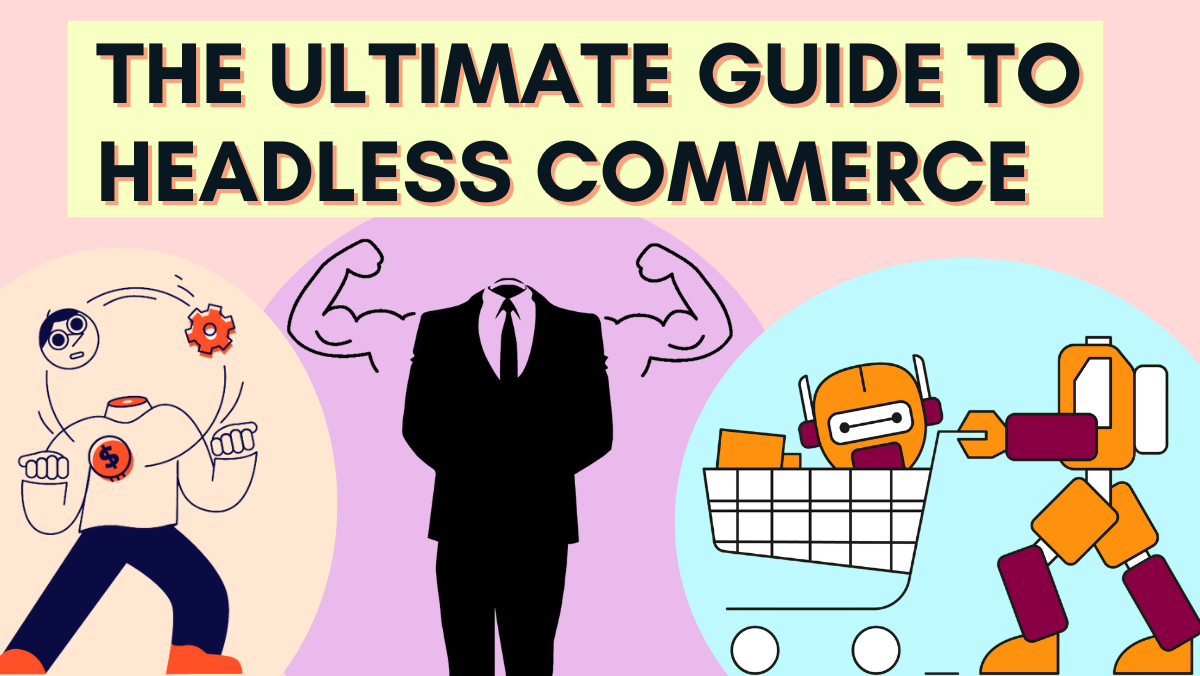
The Ultimate Guide To Headless Commerce
The world of eCommerce is evolving rapidly, or you can even say that it has lost its head.The customers are getting used to consuming content and making purchases through various technologies ranging from IoT devices to progressive web apps. The legacy ecommerce platforms are struggling to meet the demands of the customer.Consumers are getting new ways like Amazon Dash buttons, smart voice assistants, and in-store interfaces to explore product information, read reviews, and place orders. In general, we can say consumers are adopting the IoT era, even if most retailers have not adopted it yet.Ecommerce brands moving with this trend are reaping the rewards, while others are scratching their heads. So, are you wondering how you can get in on the action without inventing an IoT device or building back-end solutions from scratch? The answer to your question is a headless commerce platform. Let’s see what it is.What Is Headless Commerce?A headless commerce platform is an ecommerce solution that stores manage and deliver content without needing a front-end delivery layer. In its most accessible term, we can say headless commerce service is a separation of the front end and back end of an ecommerce application. Its architecture offers brands freedom of expression to build their business strategy. Most importantly, it allows brands to modify the customer experience.Let’s take a closer look at some of the benefits of headless commerce.Top Benefits Of Headless CommerceHeadless commerce service is typically for more giant enterprises with more extensive development and IT teams. Many businesses often have months-long development queues and ambitious creative and marketing teams eager to rapidly test new designs, copy, and templates on the front end. So, these forced brands need to embrace innovation like never before. Every period of developer time is essential, as speed in the market is often tied to an increase in cash flow.Hence, if you are thinking of switching to a headless commerce platform, the four most significant benefits of headless commerce can accelerate your business.It can provide better employee adoption as some organizations are hesitant to use new technologies due to steep learning curves. Having a modern commerce platform and the modesty of a headless commerce service will solve this issue because each team member can easily access and update the front end without advanced skills.Headless commerce platform gives brands the right tools to build customized experiences for their shoppers. The APIs ensure coordinated, brand-consistent experiences across channels by providing services such as promotions, inventory, product information, etc.It ensures time-saving changes to the front-end developers. Any developer who uses headless commerce platform templates and partner solutions only needs a few clicks to jumpstart commerce apps that increase conversion.The architecture of headless commerce quickly helps businesses launch new front-end experiences with a minimum of costly back-end development.These are some reasons why companies are interested in improving their user experience, as headless commerce systems can help them deliver even better customer satisfaction rates.How Do You Get Started With Headless Commerce?It is a fact that more than half of the developers are not designers, or we can say most designers are not developers. Headless commerce platforms provide APIs and tools for developers to build experiences across channels based on a single view of data. On the other hand, creative teams focus on optimising the user experience and interface to improve customer engagement and conversions. Conclusion A headless commerce system passes requests between the presentation and application layers through web services or application programming interface (API) calls.For example, when the user clicks an “Add To Cart” button on their smartphone, the presentation layer of the headless ecommerce system sends an API call to the application layer to add the product to the cart. The application layer sends another API call to the application layer to show the customer the status of the cart page. Hence, this architecture of headless commerce brings customised experiences for their shoppers and also helps businesses improve their customer services to meet the requirement of the sales.
More detailsPublished - Fri, 09 Jun 2023
Search
Popular categories
Ecommerce Trends
239Business
54Marketing
37Website
23Social Media
22Courses
21Latest blogs
The Power of Email Marketing in eCommerce
Fri, 15 Mar 2024
Tips for Optimizing Product Pages for Conversions
Thu, 14 Mar 2024
Mastering SEO for eCommerce Websites
Wed, 13 Mar 2024
Write a public review