Created by - Yashraj Gautam
How Digital Marketing is Different From Social Media Marketing?
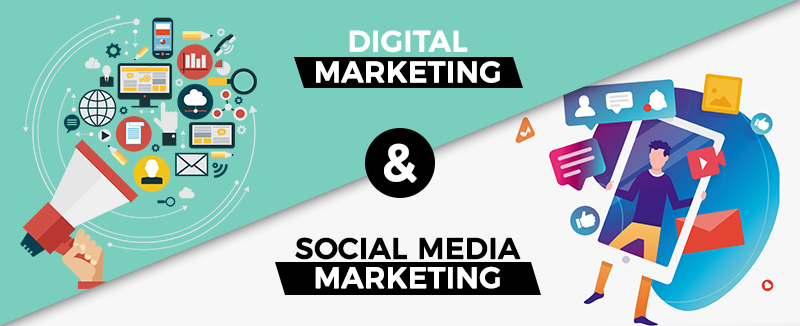
All of us know that Digital Marketing and Social Media Marketing are synonymous terms in an age.However, the reality is social media is long preceded by Digital Marketing. When there are a couple of men and women that try to indicate that Digital means new or fresh Digital Marketing Course has been around for nearly a century.Digital Marketing is one of the emerging branches of Marketing that has changed the way in which marketing is performed in yesteryears. Digital Marketing does not depend on internet-based platforms because it can also be performed offline and so the reach is comparatively wider. We focus on banners in it so that we create an impression on the minds of the customer.On the other hand, if we see towards social media marketing, its type of marketing that uses social media platforms to increase the traffic and increase customer engagement. It completely depends on the Internet and if we want more engagement then create unique content. Marketers have an aim at actively engaging with social media users.If you compare the speed of a product or service advertised on social media and digital media then obviously social media will win as the reach is faster. This is due to an active response of the user in the form of like, share, comments which help in reaching a larger audience in seconds and so digital media is slower.If you are still thinking that Digital Marketing and Social Media Marketing are the same then please keep in mind that social media marketing is just a part of the digital marketing institutes. Their role is completely dependent on your business goals. Social Media is newer as compared to digital marketing and it became an essential part of advertising for most of the companies. To achieve the maximum potential client’s social media campaigns will operate in harmony.ConclusionIt’s a major thing to learn the difference between these two. Today, both social media and digital marketing are key components for your business. Also, whether you use social media or digital, you should be specific about to explain your business. We can see that digital marketing is the future of marketing and for sure it will gain more and more ground in the online and offline world.Social media make a connection with other people. Since it’s a part of digital marketing for sure it’s here to change the way we find new customers and promote our business.
More detailsPublished - Tue, 06 Jun 2023
Created by - Yashraj Gautam
How Digital Marketing is Different From Social Media Marketing?
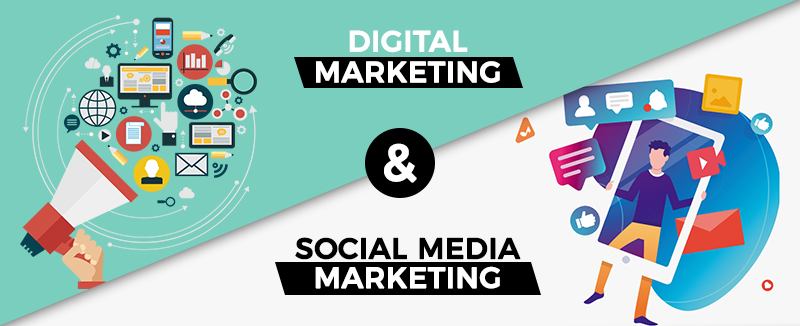
All of us know that Digital Marketing and Social Media Marketing are synonymous terms in an age.However, the reality is social media is long preceded by Digital Marketing. When there are a couple of men and women that try to indicate that Digital means new or fresh Digital Marketing Course has been around for nearly a century.Digital Marketing is one of the emerging branches of Marketing that has changed the way in which marketing is performed in yesteryears. Digital Marketing does not depend on internet-based platforms because it can also be performed offline and so the reach is comparatively wider. We focus on banners in it so that we create an impression on the minds of the customer.On the other hand, if we see towards social media marketing, its type of marketing that uses social media platforms to increase the traffic and increase customer engagement. It completely depends on the Internet and if we want more engagement then create unique content. Marketers have an aim at actively engaging with social media users.If you compare the speed of a product or service advertised on social media and digital media then obviously social media will win as the reach is faster. This is due to an active response of the user in the form of like, share, comments which help in reaching a larger audience in seconds and so digital media is slower.If you are still thinking that Digital Marketing and Social Media Marketing are the same then please keep in mind that social media marketing is just a part of the digital marketing institutes. Their role is completely dependent on your business goals. Social Media is newer as compared to digital marketing and it became an essential part of advertising for most of the companies. To achieve the maximum potential client’s social media campaigns will operate in harmony.ConclusionIt’s a major thing to learn the difference between these two. Today, both social media and digital marketing are key components for your business. Also, whether you use social media or digital, you should be specific about to explain your business. We can see that digital marketing is the future of marketing and for sure it will gain more and more ground in the online and offline world.Social media make a connection with other people. Since it’s a part of digital marketing for sure it’s here to change the way we find new customers and promote our business.
More detailsPublished - Tue, 06 Jun 2023
Created by - Yashraj Gautam
Hyperlocal Marketing in India: How It Works, Benefits, Strategies, Market Size,
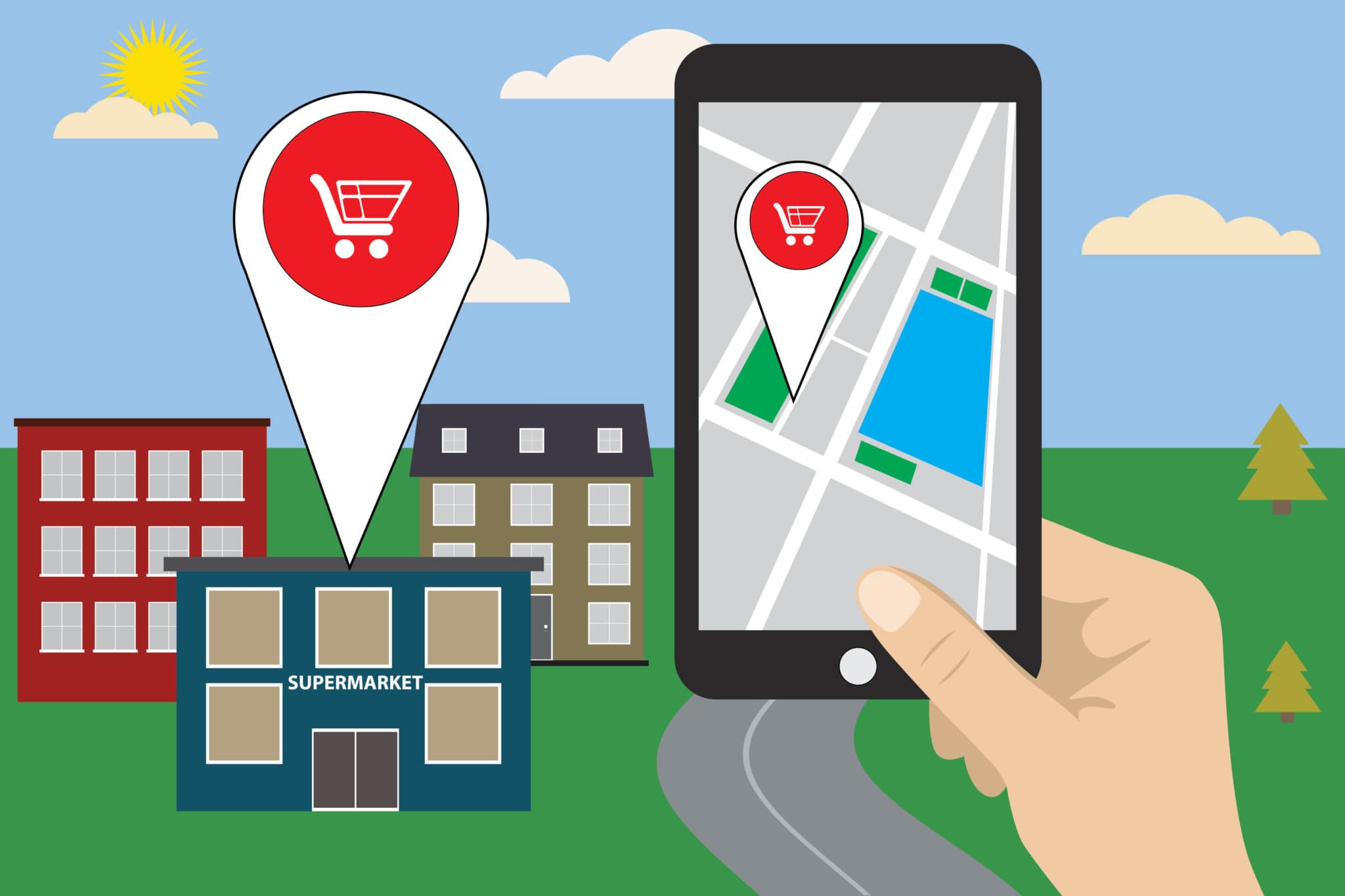
A conventional marketing strategy that focuses on a smaller number of shoppers in a very specific area is hyperlocal marketing.In other words, it specifically targets individuals who want to buy goods or services locally in extremely localized and address-specific areas.A super-targeted type of hyperlocal marketing strategy to attract inbound traffic, companies don’t need to spend money on national campaigns. Hyperlocal marketing strategies can be based on one block and provide the basis for a real one-to-one relationship in a particular area with customers. It seems less daunting, but a very tough objective to accomplish in practice.The main goal of hyperlocal marketing in India is to increase foot traffic to retail stores and focus on highly commercially intended near-me searches. When individuals conduct hyperlocal searches, they search with the intention of purchasing.Hyperlocal case studies are based on a study of local points of interest and other demographic and economic data, the market potential for each store. This helped the business build a plan for its latest product to target which stores it should target.Hyperlocal Geo focuses on how new businesses are targeting their new store strategies, not in the town or store, but wanting to carry out a new product across India. In all its stores, Hyperlocal Geo decided to introduce its product to give them the best results. Then they give Hyperlocal companies a collaboration to find out the exact position they should target.The hyperlocal market size in India was at $1,324.2 billion in 2019, and by 2027 it is expected to hit $3,634.3 billion, with a CAGR of 17.9 percent from 2021 to 2027. Hyperlocal services are those services delivered within a small geographical region in which vendors can deliver products or services within a minimum amount of time. The unique aspect of the hyperlocal service model is that both the consumer and the seller are very close to the entire supply chain.Online and offline businesses are in a strong position to take advantage of the hyperlocal market in India, taking these figures and data into account. Here are some ways to expand your business using a hyperlocal marketing strategy.Hyperlocal Marketing Strategies:1.Improve your Google My Business listingIt is important for small business owners who have physical locations to optimize their pages on Google My Business. The cornerstone of hyperlocal marketing is Google My Company.Did you know that location is linked to 33 percent of all searches on Google? You should concentrate on that and provide incredibly detailed information about your business. To explain what separates your small business from competitors, a special business summary that contains 750 characters. You should add appropriate keywords, and do it within the first 100 words, avoid overloaded keywords.2.Build hyperlocal contentTo build good partnerships and raise sales, small businesses involved in leveraging the local community want to engage in dialogue groups. Developing local content in a specific local area will increase rankings and arouse people’s interest. First of all, what consumers want to consume is what you need to concentrate on, but not what you want to make.Analyze your content and create the type of content that will most resonate with your clients. It can be difficult to reach an audience in a specified local area often. You should try to attract local talent so the desires and needs of a local area you are involved in are better understood.3. Make the contact details on the website stand out.It’s easier for a potential customer to reach you by adding some contact details to your website. It also makes the brand more open, contactable, and tangible, which, in turn, will lead to more sales and conversions and create more satisfaction with customers.Ensure that localized objects such as monuments, local landmarks, popular attractions, public streets, and other local points of interest are included, enabling individuals to easily access you online and interact with your company.4. Add organized markup of dataIt is important to categorize the company as local while concentrating on hyperlocal marketing. It will help Google find as much information about your company as possible by including structured data markup relevant to your company on your website pages.List various company attributes, such as an address, business hours, phone number, social links, the logo of the web, and an official name. If properly implemented, it makes it easier to appear in particular geographic search results for your business. Use the Structured Data Testing Tool to improve the relevant results with schema markup. In your Standardized Data tags, the tool helps to identify potential problems and reduce the number of errors and alerts.5. Using Marketing EmailEmail marketing is a smart way to advertise and drive a lot of organic traffic to your local company. You can incorporate maps to display your local business directions, add click-to-call buttons, share a simple message, and include special offers. Optimizing your emails for viewing on mobile devices and tablets is vital as many people are likely to open them using these devices. To raise your website traffic, you can also follow this ultimate email outreach guide.Wrapping Up:A better way to improve your local presence, drive more traffic, and take your company to the next level is to have a successful hyperlocal marketing strategy. Keep exploring and learning from every hyperlocal initiative to find out how to scale the target cities and regions effectively.
More detailsPublished - Tue, 06 Jun 2023

Created by - Yashraj Gautam
What’s New to learn in digital marketing – An Competitive approach for 2021
Digital marketing has become more of a priority than ever with many upcoming trends in digital marketing channels for online ads. You can only learn digital marketing expertise through practical experience if you are an advertising specialist in a business, a freelancer, or an entrepreneur. Although new to learning in digital marketing there is a lot of digital marketing video content and other types of study material that is certainly useful, you can not ignore the fact that accurate knowledge happens only through the hands-on use of digital marketing techniques, strategies, and platforms.But digital marketing would be a big thing with many market segments and branches of study. In developing and implementing a full-fledged online marketing plan, there are a lot of skills and expertise across different fields involved.To make a digital marketing approach for 2021here’s a list of the most critical skills a digital marketer must have:SEO (Search Engine Optimization)It is essential to organically rank your website, mainly when 80% of the clicks are on organic results, considering around 67k searches per second on Google. To optimize your website to appear on the search engine’s first page of the search results, there are a lot of instruments and techniques you need to master.SEO does not have instant outcomes and is, therefore, not an overnight operation. You need to be familiar with all the SEO techniques on-page and off-page as well as learn the tools that make the process easier.AI-Based AutomationIn the past few years, Artificial Intelligence has made immense developments. The number of companies using AI-Powered technology and automation to support their marketing campaigns has increased significantly. This is one of the significant innovations behind smart assistants and voice search. It has also made it possible for chatbots, which are now showing up more than ever on almost every website.AnalyticsUsing tools like Google Analytics, simple and advanced knowledge of user activity on a website/web page is understood. Google Analytics is an essential digital marketing ability that allows you to understand fundamental metrics such as user traffic, the average length of sessions, completion of bounce rate targets, etc.So as a digital marketer, it is one of the essential skills to learn. One of the required abilities to excel in any department you want to specialise in is tracking and reporting performance through analytics.Content MarketingContent marketing is also an essential skill in digital marketing that helps to gain the interest of users as well as reach more users and increase user engagement.In addition to being engaging, the content on the website must also be SEO optimized to spot your website to top search results for specific keywords and generically that is synonymous with your brand. Google Keyword Planner lets you understand the volume of the quest and identify new keywords that better apply to the products/services of your brand.Video Creation/EditingToday, the attention of users is currently short and uncertain, making it all the more difficult for designers and video makers to gain the attention of people at first glance. Editors must be familiar with software and Illustrator to master the craft. Due to high interaction rates, social media platforms today are rich with interactive content as opposed to static content. GIFs are commonly used to create innovative, interactive displays to connect with users.Wrapping Up:Not only can these digital marketing skills help you to find your topic of focus, but they will also provide you with an overall understanding of how digital marketing works. In addition to these, other skills that can be used to take a brand to the next level are web design, affiliate marketing, influence marketing, email marketing, etc.
More detailsPublished - Tue, 06 Jun 2023
Created by - Yashraj Gautam
How to setup Google Analytics 4 Property (GA4)
What is GA4?GA4 is built on the Google analytics app + web application backbone (Firebase). In data collection and reporting, GA4 takes a different approach from what you used to see in Universal Analytics (UA).Through transitioning to an ‘event’-based model, Google is pushing advertisers to reconsider how they view user data. In GA4, knowledge is gathered and interpreted differently, as it focuses mainly on the activities and experiences of the user’s journey.It is important to identify that this will become the latest Google Analytics default, as new Google Analytics configurations usually enable you to set up GA4 and44, not UA. Fortunately, we can run GA4 parallel with the current UA setup to show you how to set this up.New setups for UA Property are still available. After clicking ‘Create Land,’ look for the link ‘Display Advanced Options.’ You will have the option to create GA4 and UA or create UA only.How to Set Up GA4: Step By Step ProcessLet’s get started by navigating inside your Google Analytics account to your Admin Settings. Look for the Upgrade to Google Analytics 4 Property link under Property Settings.If you do not have an upgrade option available, you can click ‘Create Property‘ to create a new GA4 Property and skip to step 4 after setting up Create Property.2. To begin the setup process with the Google Analytics setup wizard, click ‘Get Started.’ Then, depending on your current Google Analytics 4 you will have many choices.If you use Google Site Tag to enforce UA, the wizard will allow your existing tags to collect data.You’ll need to create a measurement ID for your new GA4 property to start data collection. The Measurement ID is identical to the UA ID. By clicking the right arrow shown below, enter the ‘Tag installation’ menu.2. GA4 has no views like its predecessor’s. It has Data Streams instead. As it automatically tracks such events such as Scrolls, Outbound Connection Clicks, Site Search, File Downloads, and more, the Data Stream extends beyond the Pageview Request. Expand the Add Stream drop-down and choose the app that you want to track.3. Set up your data source by entering the URL of your website and the name of the stream. When done, press ‘Create Stream.’4. You have your Measurement ID now. Copy or take note of the Measurement ID as needed in Google Tag Manager to set up the GA4 Configuration Tag.5. Navigate to your Google Tag Manager Dashboard, create a new tag, select ‘Tag Configuration’ and choose ‘Google Analytics: GA4 Settings’ as the tag type.6. Next, add the Measurement ID. Instead of entering it manually, it is suggested to create a Constant Variable for the Measurement ID. It will allow you to reference and avoid future inconsistencies with the Measurement ID for other tags.7. To create a Constant Variable, complete the steps below:Tap on the Variable iconCreating a new VariableTo fill in the Variable Type list, press Variable Configuration.Under Utilities, pick the ‘Constant’ VariableIn the Value field, enter your GA4 Measurement ID and hit Save8. Configure your trigger to fire on pages now that the Tag is set, and click Save to complete the GA4 setup.9. You can use Tag Manager’s Preview Mode to test your GA4 Tag, or you can publish your container to push the new Tag live. After checking, remember to publish your container; otherwise, your GA4 property will not receive data. You can view live hits by visiting the GA4 Realtime report once the Tag is live. The published Tag can also be viewed in Google Tag Assistant. You can start using it to track users and their actions more efficiently now that you’ve set up GA4.Wrapping Up:Google Analytics 4 (GA4) tool allows a unified measurement between your website and app of user interactions and events. You can use GA4 Properties for your Google Analytics measurement strategy if your mobile app includes embedded web views, a similar web app, or web pages that mimic or otherwise expand the mobile experience.
More detailsPublished - Tue, 06 Jun 2023
Created by - Yashraj Gautam
Meme Marketing- The new trend of marketing to earn money
Memes are at the peak of the entertainment industry now.Today, humans spend much of their time browsing, viewing, and posting content on social media that they believe how big is meme marketing and artistic or entertaining.It has become part of our everyday life to share memes with people who believe that a meme’s material connects.What is Meme Marketing?A new trend in meme marketing is viral marketing that uses word of mouth and social media networks to achieve marketing objectives. Creating appealing, entertaining, and fast-spreading news or content is the practice of using users to promote a brand or product.Rise of meme marketing in IndiaIn a world, everyone is filled with how meme-makers make money and support ads/content. Marketing memes are evolving because of the new attention space that catches young people’s attention and keeps them engaged.In 2018, social media companies had over 326.1 million social media clients, based on Statista. The outcome expects to be 448 million by 2023. It offers details on the very best selection of consumers on the planet through entirely different channels. As of 2020, Indians have been the most significant social media applications like Fb, TikTok, and WhatsApp.On social media, the everyday user spends no less than 3 hours a day. Although this may itself be a big market, the demographics are what makes it essential for entrepreneurs. Most users on social media are between the ages of 17 and 24. Thus, a meme marketing strategy is a gold mine then!How to Make Money from Memes?One of the internet’s most common ways to get a fast laugh is through a meme. Memes are components of web culture that spread rapidly. The aim is to take a humorous approach to something that everybody can relate to. With memes, a lot of individuals learn how to make money.Ways to Make Money with MemesBuild an Instagram, Meme Page:Okay, now the idea has certainly been pounded to death and is highly competitive. However, by using memes, there is still money to be made on Instagram. There are usually two distinct ways to build a lucrative Instagram meme account:To gain a following, create a meme Instagram account, then sell supported posts or advertisements.Monetize and follow Instagram with a meme of sale products.Make Youtube Meme Compilations: It is, actually, a pretty random niche in terms of making money on YouTube. There are quite a few accounts out there making compilations of memes, similar to collections of vines or random amusing video reels.Make a Meme-Based Game:The prospects of creating the next What Do You Meme, the most effective meme game ever made, are pretty slim. However, it’s interesting to take an idea that is common on social media and turn it into a game or even an app. Plus, a decent number of vendors seem to be trying their hand at the meme-inspired game market. Again, in terms of making cash, this is a bit of a long shot. Still, this isn’t a wrong choice if you want a side project to work on.Open a Meme Etsy Shop:By far, opening an Etsy shop is one of the easiest ways to begin selling meme merchandise. There are millions of monthly visitors to Etsy, and it is one of the most popular online craft, handmade crafts, and printable art markets. Also, on your online store, Etsy lets you sell handmade or third-party products.Etsy is now a dynamic industry, and for the world of memes, this remains true. You’ll need to spend time developing your reviews and store credibility to become a top seller on Etsy. Additionally, to help improve organic exposure, you will have to optimize the SEO of your store. But, Etsy’s full meme pages are going to make a killing.Conclusion:Marketing for memes is a specific field that changes all the time. It provides brands with a unique way of engaging in India’s engaging, unique, and ever-dynamic popular culture focused on contemporary and current events.
More detailsPublished - Tue, 06 Jun 2023

Created by - Yashraj Gautam
Know how GDPR will Transform the Digital Marketing Industry
The demanding existence of the General Data Protection Regulation (GDPR) has forced companies, while using personal data, to re-think how they execute their activities. Marketing, especially in the digital world GDPR impact on digital marketing, is not an exception.Whether your organization performs data analysis on its customers’ online activity or uses a mailing list to send electronic marketing, these activities must be a frame in the context of the more stringent obligations imposed by the GDPR applicability.Moreover, the processing of personal data involving electronic communications should also consider specific rules in the e-Privacy regime, as if the GDPR were not sufficient. This is currently being remodeled into a more stringent regulation that will bring the existing framework into balance with the rules applied under the GDPR.What is the GDPR?In April 2016, the European Parliament adopted the GDPR, substituting an outdated 1995 data protection directive. It includes provisions requiring companies to protect EU citizens’ personal data and privacy for transactions occurring within the EU Member States. The GDPR also controls the exportation of personal data outside the EU.Across all 28 EU Member States, the provisions are consistent, ensuring that businesses have only one requirement to follow within the EU. However, the standard is very high and will require most companies to make a significant investment to reach and maintain it.What Marketers Need to Know about the GDPR data collectionCollecting data is a core marketing practice, and it has always been. If you don’t have data to work with, you can’t do anything, and this was as true in the age of Don Draper advertising as it is today. The GDPR impact on small business and targets this very first move. As a result, some of your most significant duties as a marketer of any kind rest within the initial selection mechanism.In the past, from any chosen source, you could obtain whatever data you needed (or wanted), and the rest was up to you. You’re not able to take the data as you like anymore.Three key GDPR issues impacting the data collection and collection activities are:Legal bases for processingGetting consentOpting outWhat types of data are covered by the GDPR for privacy?Web details such as location, IP address, data from cookies and RFID tagsDetails on essential identification, such as name, address and ID numbersBiometric dataPolitical opinionsHealth and genetic dataWhat’re the Legal Bases for Processing?The GDPR gives six legal bases for processing data. If you wish to obtain and use some personal information from an EU resident, you need to follow these criteria. They are:ContractLegal obligationVital interestsConsentPublic taskLegitimate interestsIn general, marketers work on the first base: consent. Why? That to fulfil a contract or legal duty, you don’t need to sell it to anyone. Also, it is not a general assignment or within your critical interests. It is optional to use digital marketing, so you need permission.Conclusion:Finally, for retailers, the GDPR impact in India has high implications, and it has caused many to reconsider how they work. But if marketers of all kinds come together and adopt the GDPR principles, then and then you’ll have a more willing and committed audience. Still, by protecting their data, you will do your part to conserve their rights and freedoms, which is much more important than any old mailing list.
More detailsPublished - Tue, 06 Jun 2023

Created by - Yashraj Gautam
How To Earn From Affiliate Marketing For Beginners?
Are you interested in learning how to make money with affiliate marketing but don’t know where to begin? In this post, you’ll learn how to use successful affiliate marketing for beginners to generate passive income.What is Affiliate Marketing?Affiliate marketing is how a person earns passive revenue by marketing the products of other people or companies. It is a method of generating a profit by selling such items. An affiliate marketer’s goal is to attract buyers to products and then sell them.How Does Affiliate Marketing Work?The affiliate is the person who brings people to the product and assists them in purchasing it. When a customer purchases a product, the affiliate receives a commission. Affiliates can promote the products in person or through social media.Affiliates are often compensated in three ways: the number of things sold, the number of consumers, and the number of clicks. You can join the best affiliate programs for beginners to gain more knowledge about the field. It’s an excellent source of passive income that you can do from the comfort of your own home.How To Make Money With Affiliate Marketing?To make enough money with affiliate marketing, you’ll need a website first. When it comes to creating a website, you have many alternatives, the finest of which is WordPress. Even if you don’t know how to code, you can create a professional-looking website in minutes using WordPress.Next, select products that are relevant to your niche and content. Joining an affiliate network is one of the most significant ways to choose your affiliate items. Affiliate networks connect merchants and affiliate marketers for both to make more money. You can join Amazon affiliate marketing for beginners to begin your journey in affiliate marketing.Make Affiliate Revenue-Generating ContentMost newbies who want to make money with affiliate marketing simply write some random content and include affiliate links within it. But if you want to increase your affiliate revenue, you must ensure that the information you produce reaches your target audience. Your target market is someone who wants to buy a product but isn’t sure if it’s worth the money.It is the job of an affiliate marketer to use high-quality content to help visitors find the correct product for their needs. You must assist them in making a purchasing decision before directing them to the product’s website to complete the transaction. So, your article should include the types of keywords that your target audience searches on Google when researching a product before purchasing it.Promote Your Affiliate ProductsLook for themes that revolve around your target audience’s hunt for a solution to an issue they’re experiencing. It’s time to start incorporating affiliate links into your content when you’ve completed your keyword research and come up with some content ideas. The method you use to put your affiliate links will vary depending on the post you’re authoring.If you write a product review, you should not include affiliate links for five separate goods. If you’re showcasing top 10s or top 5s, on the other hand, you should include many affiliate links to boost your chances of making more sales. The goal is to place your links in the most advantageous locations imaginable.Product KnowledgeProduct knowledge is the most crucial factor that can set you apart from your competition. In your line of employment, you must stand out. Buyers should regard you as an authority in your field. As a result, you’ll need a lot of information on the goods you want to offer.No affiliate marketer should sell things solely to make a lot of money. Even if the commission is lower, if you know your product, you will earn more. Most importantly, you must monitor the reviews of the things you wish to sell.Assist Your ClientsYour primary objective should be to assist your consumers and deliver accurate information. If your customers find this helpful, they will most likely return. Always do your homework and present accurate and up-to-date information.Affiliate marketing is a fantastic online business for beginners to make money on their own time. It is a fantastic way of generating passive income. You can be very successful in this industry if you just follow the advice given.
More detailsPublished - Wed, 07 Jun 2023
Created by - Yashraj Gautam
Essential E-Commerce Marketing Strategies For 2021
No matter whether your online retail firm is just getting started or has grown to the point where it is sustaining a large client base,It is critical that you remain on top of the most recent e-commerce marketing trends and methods for your industry. The process of designing, developing, and ultimately launching an e-commerce website is a significant milestone for your company. Consequently, it is critical to invest in a well-designed website structure and an efficient ecommerce marketing strategy.Using eCommerce marketing techniques such as social media and search engine optimization, your online shop can increase brand recognition, boost sales, and expand its market share in one of the most competitive sectors in the world. So, let’s have a look at the most effective marketing strategies for eCommerce startups to learn about the most effective proven strategies for marketing an e-commerce company. 1. Search engine optimization (SEO) When you run an online shop, consumers must be able to locate your website easily. Are you having trouble getting a good ranking in search engine results? Search engine optimization (SEO) can assist you in increasing the number of visitors to your eCommerce website.You can improve the flow of quality visitors to your website by discovering and targeting the keywords and phrases that consumers will use to locate your goods. Potential consumers will be able to discover and explore your site more easily if you optimize your eCommerce website for search engines. Furthermore, optimizing your website will enhance the user experience while also bringing in more targeted visitors.SEO is especially important for e-commerce stores because customers are typically ready to buy when searching for a particular product. They may not even be aware that your shop exists if you do not use this e-commerce marketing approach. Increasing the visibility of your website via e-commerce SEO increases the number of incoming leads and helps you optimize revenues.2. Pay-per-click advertisements (PPC)Why would your e-commerce website need pay-per-click advertising (PPC) if it is already ranking for relevant keywords organically? The use of pay-per-click advertising may be very beneficial for generating traffic to your e-commerce website while you work on improving your organic rankings.Unless you’re in an extremely specialized sector with a high volume of traffic and little competition, you’ll most likely depend on pay-per-click (PPC) advertising to generate visitors to your e-commerce website, at least at the beginning of your marketing campaign.With Google Advertisements, you can have your ads appear when people search for certain keywords that you choose. If you target the appropriate keywords, you may see results very immediately.3. Utilization of social mediaAs we all know that social media is used by 71 percent of people online, the likelihood that you will be able to contact your target market via Facebook, Twitter, YouTube, or other social media sites is very high and it is one of the most effective social media ecommerce marketing strategy for beginners. Using social media to promote your e-commerce goods, events, and promotions is a fantastic way to get the word out about your business, which is why it is one of the most highly suggested e-commerce website marketing methods available.Customer input and the development of a fan base can also be solicited via social media platforms. Customers who enjoy your goods are more inclined to share your material on social media sites such as Facebook and Twitter. Excellent evaluations will assist to establish your eCommerce website as a useful resource, and positive comments will increase confidence among prospective consumers.4. Utilization of content marketingFor e-commerce marketing, the ability to create and share great content online is crucial. Quality material is highly regarded by search engines, and sharing it online may aid in the improvement of your search engine results. When it comes to this e-commerce marketing approach, don’t be scared to experiment with various kinds of content.Blogs are fantastic, but they will not be sufficient in achieving the outcomes you want on their own so you should consider including visually appealing infographics or downloadable instructions in addition to your blog material.By providing valuable material to visitors, you will improve your chances of obtaining repeat clients. In addition, you will acquire some credibility as an expert source in your field. 5. Email marketing The ecommerce marketing strategy includes using email to communicate your newest updates and articles, as well as to support other tactics in your e-commerce marketing plan, which is a fantastic way to build your brand and grow your business.You can also use this platform to promote new goods, provide discounts, and conduct competitions. You should incorporate a registration form on your e-commerce website, and encourage visitors to submit their email addresses so that they can get updates on your products. Using email marketing to drive traffic, clicks, and sales is an efficient e-commerce marketing approach for any e-commerce company.
More detailsPublished - Wed, 07 Jun 2023
Search
Popular categories
Ecommerce Trends
239Business
54Marketing
37Website
23Social Media
22Courses
21Latest blogs
The Power of Email Marketing in eCommerce
Fri, 15 Mar 2024
Tips for Optimizing Product Pages for Conversions
Thu, 14 Mar 2024
Mastering SEO for eCommerce Websites
Wed, 13 Mar 2024
Write a public review